Église Saint-Antoine de Liège, Parish church in Féronstrée et Hors-Château, Belgium
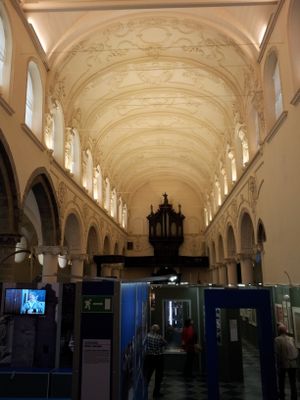
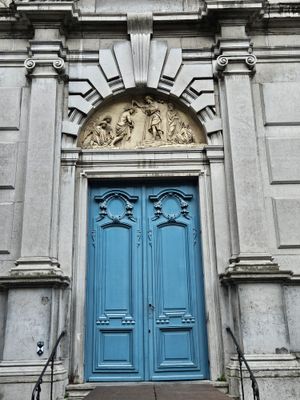
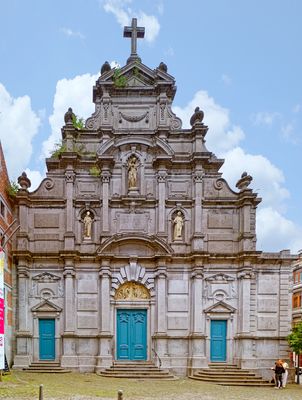
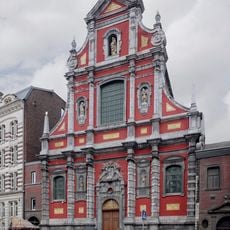
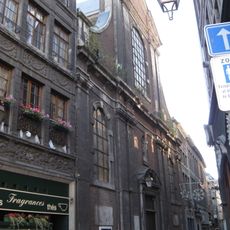
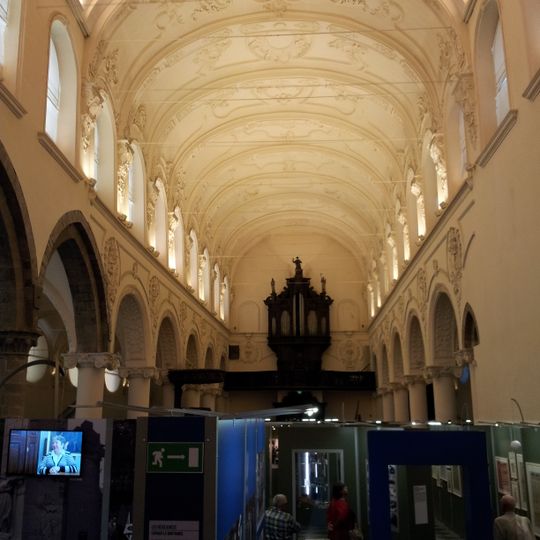
Église Saint-Antoine de Liège is a former Franciscan convent church on Rue Moray in Hors-Château, built in coal sandstone blocks and completed in 1244. Its Gothic nave is lined with round arches on smooth columns with carved capitals, under a cream barrel vault with raised plaster panels. A monumental Baroque facade was added in 1645, and a dark wooden organ case with vertical pipes hangs at the far end.
Franciscan followers settled in Hors-Château around 1240, and their convent church, dedicated to Anthony of Padua, was completed in 1244 in coal sandstone. A monumental Baroque facade was added in 1645, and the interior received stucco decoration completed in the following century. A V1 explosion on 16 December 1944 damaged the choir, which was restored in the Franciscan spirit; the church was deconsecrated in 1977-1978.
The church is named after Anthony of Padua, to whom the Franciscan Minor Friars dedicated it in 1244. Deconsecrated in 1977, it now hosts cultural events and temporary exhibitions, while parish worship moved to the church of Sainte-Catherine. A wooden statue of Saint Barbara by the sculptor Jacques Vivroux (1703–1777) is kept here.
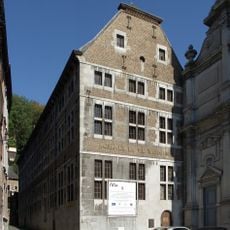
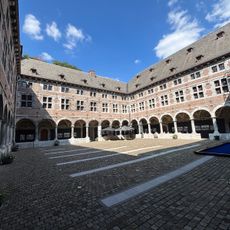
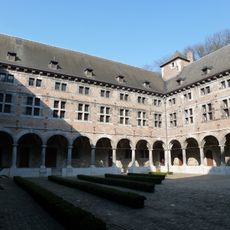
The church stands at Rue Moray 2 in the Hors-Château district, a short walk from the city centre. It has been deconsecrated since 1977–1978, so there are no services; the building is managed by the Province of Liège and used for temporary exhibitions. The former convent complex next door, including the Museum of Walloon Life, can be visited in the same outing.
The 13th-century high altar survived the V1 explosion of 16 December 1944 almost intact among the rubble and was returned to liturgical use after the restoration. Tombstones from various periods are set into the choir floor and the aisle walls.
The community of curious travelers
AroundUs brings together thousands of curated places, local tips, and hidden gems, enriched daily by 94,952 contributors worldwide.