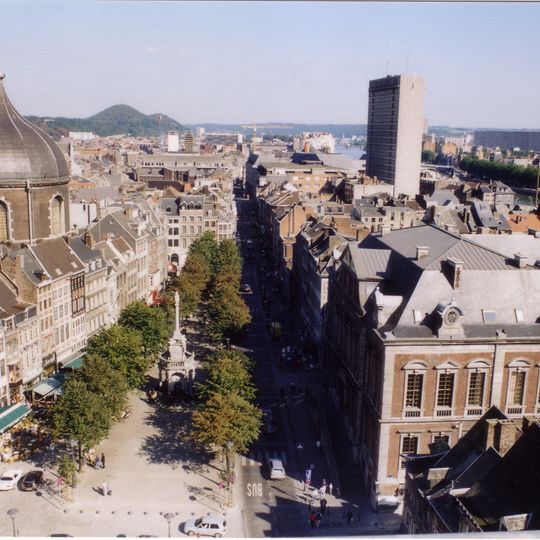
Place du Marché, square in Liège, Belgium
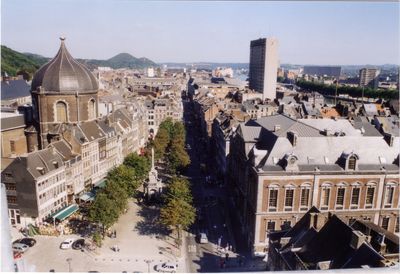
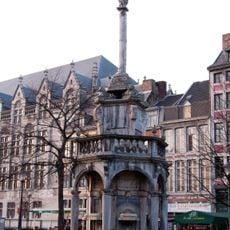
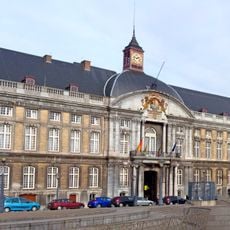
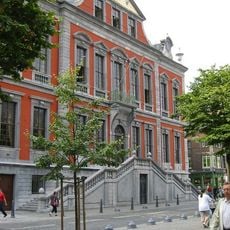
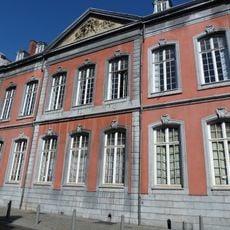
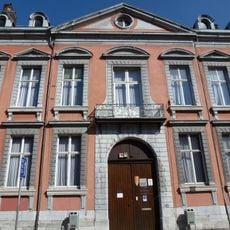
Place du Marché is Liège's oldest square, an irregular trapezoid of under half a hectare opening off rue Féronstrée. At its centre the Perron column rises above a fountain, and the classical town hall known as la Violette, rebuilt in brick and limestone between 1714 and 1718, faces the market. The square borders the site of the destroyed cathedral of Notre-Dame-et-Saint-Lambert.
The square has been a marketplace for centuries where merchants sold goods and the city made official announcements from the Perron. After fires and attacks during past conflicts, damaged buildings were rebuilt in their original style, preserving the square's historic character.
The name of the adjoining rue En Neuvice recalls the covered passages where cloth was fulled. From 1384 the guilds, called métiers, elected the city's administrators each year and met in a house named "la Violette" on this square, on the site of today's town hall. The town hall, rebuilt 1714–1718, has a triangular pediment bearing the arms of Prince-Bishop Joseph-Clément of Bavaria and of the two burgomasters of the time.
The square is easy to reach on foot in the heart of the old city and makes a natural stopping point when walking through Liège. Benches and small cafes around the perimeter offer comfortable places to rest, and as a pedestrian zone, the space feels safe and easy to navigate.
The Perron at the centre of the square is not the original: Charles the Bold had it removed in 1465 and taken to Bruges, and it was returned to the Marché in 1478, a year after the duke's death. Its base served as the spot where regulations, edicts and banishments were proclaimed.
The community of curious travelers
AroundUs brings together thousands of curated places, local tips, and hidden gems, enriched daily by 93,597 contributors worldwide.