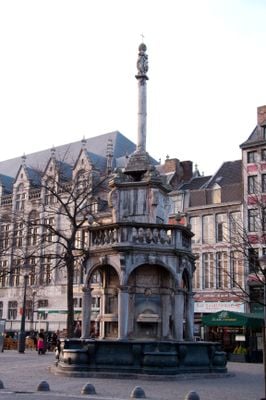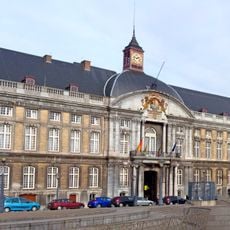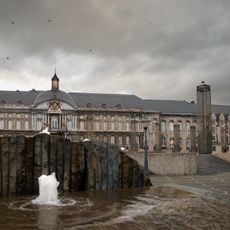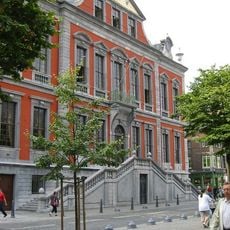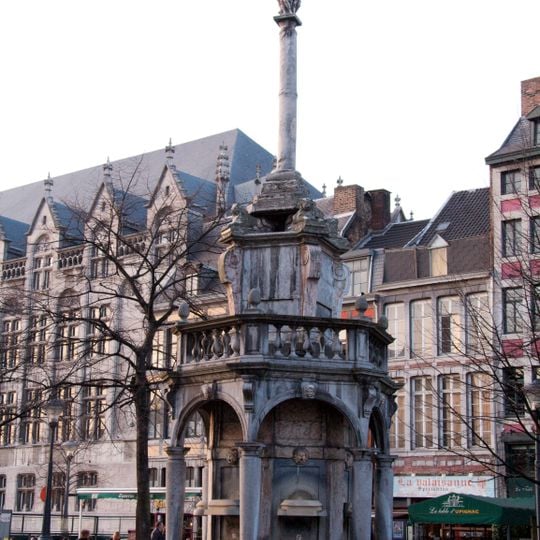
Perron of Liège, Historic fountain and monument in Place du Marché, Belgium
The Perron of Liège stands in Place du Marché as a tall stone structure with tiered sections and decorative stonework at its crown. The monument has been restored and rebuilt multiple times to preserve its form as a defining landmark of the public square.
A fountain is documented at this spot as early as 942, and the monument in its present form was built in 1305 after mining works dried up the spring. After the 1468 uprising, Charles the Bold dismantled the perron and took it to Bruges; Bishop Louis de Bourbon secured its return on 10 July 1478. A storm toppled it on 9 January 1693, and Jean Del Cour repaired it, adding the Three Graces in 1697.
The perron began as a symbol of the prince-bishop's right to mete out justice, then became a sign of civic freedom as the city council gained power. It was used as a place to announce decisions to citizens and to display and punish criminals. Since the 14th century it has appeared on Liège's coat of arms.
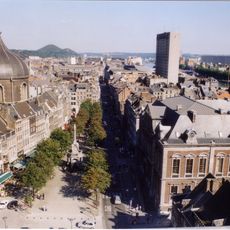
The monument sits in the center of the marketplace, easily reached on foot and surrounded by shops and cafés. The square is most lively during daytime, especially on market days when the space fills with activity and vendors.
The Three Graces now on top of the Perron are Carrara marble copies carved by Alexandre Callet, installed in November 2018. The 1697 originals by Jean Del Cour, damaged by pollution and weather, are kept at the Grand Curtius museum, as is the fragile marble column replaced in 2018.
The community of curious travelers
AroundUs brings together thousands of curated places, local tips, and hidden gems, enriched daily by 94,901 contributors worldwide.