Pouhon Pierre-le-Grand, Historic mineral spring building in Spa, Belgium.
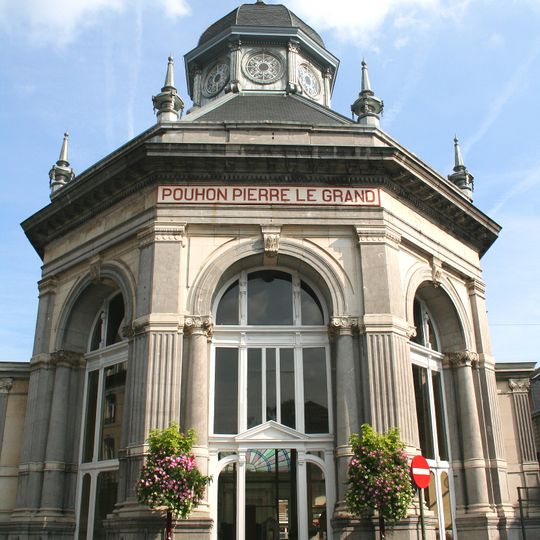
Pouhon Pierre-le-Grand is an octagonal pavilion in Spa that houses a natural spring producing thousands of liters of carbonated mineral water rich in iron each day. The structure encloses this source and makes it the focal point of the location.
The spring was already recorded in mid-15th-century writings as the pouhon of Spa. Its first shelter, a small rotunda on the market square, appears in a 1559 engraving by Gilles Pierriers. Rebuilt several times, it was given a new building in 1819–1820 with funds from crown prince William, and the present structure by Victor Besme followed in 1880.
The pavilion draws its name from a Russian ruler who visited in the 18th century, making the spring a symbol of the town's international reputation. This connection shaped how the place is seen as part of Spa's identity as a destination for water cures.
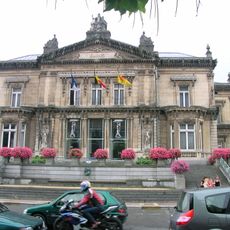
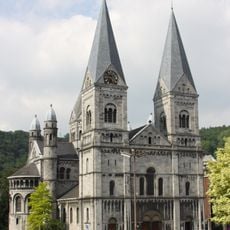
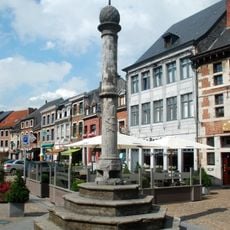
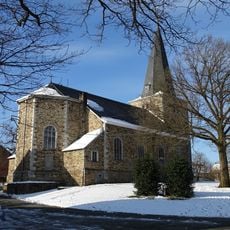
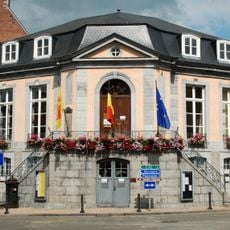
The building stands on Rue du Marché, locally called Place Pierre, where the road from the northwest meets Spa's main thoroughfare. The tourist office inside is reached through the glazed entry under the central round-arched window. The Saint-Remaclus church lies about 50 metres south; behind the building are the Pouhon aux Armes d'Autriche and, further on, the Prince Condé spring.
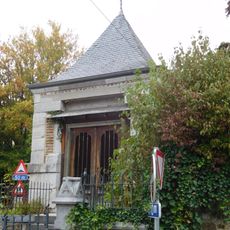
The spring's name honours Tsar Peter the Great, who took the waters at Spa in 1717 and gave a marble plaque and an alabaster medallion in thanks for his cure; these were placed in the adjoining guardroom built in 1670, not on the spring building itself. A bust of the tsar, donated by Prince Anatole Demidoff, was installed in 1856.
The community of curious travelers
AroundUs brings together thousands of curated places, local tips, and hidden gems, enriched daily by 94,019 contributors worldwide.