Joseph Marien Stadium, Art Deco football stadium in Forest, Belgium
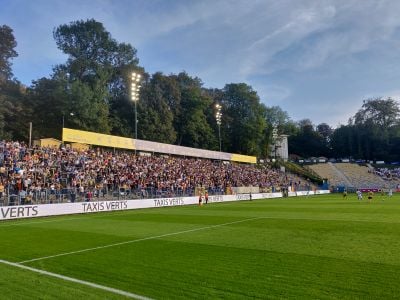
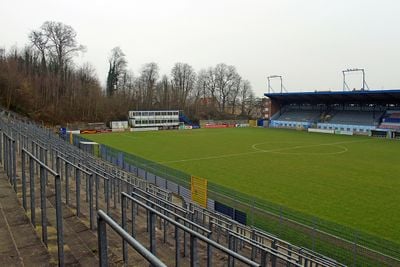
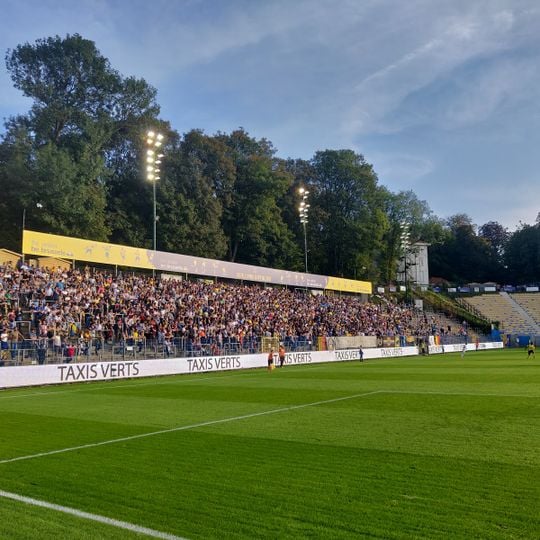
Joseph Marien Stadium is a football ground in Duden Park, Forest, Brussels. Its pitch is bordered by metal railings and advertising boards, with a long low white two-storey building along one touchline and a raised blue-seated grandstand on the right. The 1926 main stand has a brick Art Deco facade over 100 metres wide with seven bas-reliefs by Oscar De Clercq. Capacity is 9,400.
Union Saint-Gilloise opened the Stade de la Butte on 14 September 1919 with a friendly against Milan, before 25,000 spectators. After the 1920 Olympics, the club built a new stadium from 1922; Albert Callewaert's main stand went up between 3 May and 25 August 1926, and the opening match against FC Dordrecht on 26 August 1926 drew a capacity of 35,000. Renamed for club president Joseph Marien after his death in 1933, it later held 44,000.
The stadium is named after Joseph Marien, the Union Saint-Gilloise president from Duffel who died of a heart attack in 1933, and the club renamed the ground in his honour a few months later. The seven expressionist bas-reliefs by Oscar De Clerck on the 1926 main stand each depict football and athletics, the two disciplines in which Union excelled.
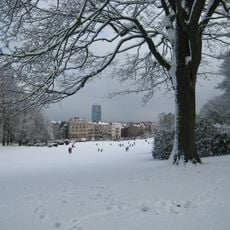
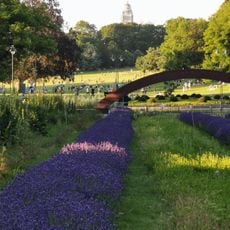
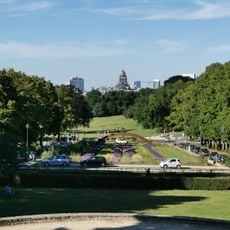
The entrance sits at one end of the Rue du Stade/Stadionstraat, and the ground lies inside Duden Park, so it is reached on foot through the park paths. The stands are uncovered, and the protected park status has blocked additions such as a roof over the open terraces. The main stand faces the Brusselsesteenweg.
The seven bas-reliefs by Oscar De Clerck on the 1926 main stand each pair football with athletics, the two disciplines in which Union Saint-Gilloise excelled. The stand's brick front is over 100 metres wide, and the rooms beneath it keep figurative stained-glass windows and the Club House's original wooden panelling.
The community of curious travelers
AroundUs brings together thousands of curated places, local tips, and hidden gems, enriched daily by 93,579 contributors worldwide.