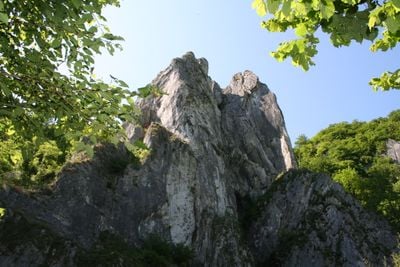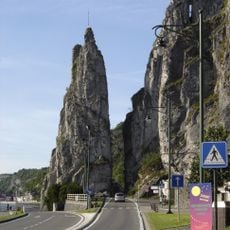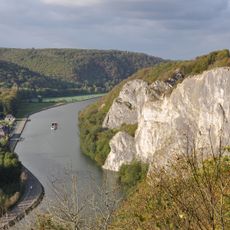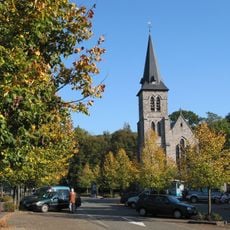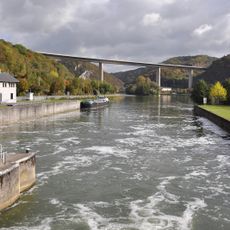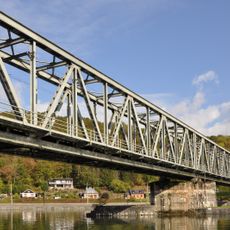
Aiguilles de Chaleux, Limestone rock formation in Houyet, Belgium.
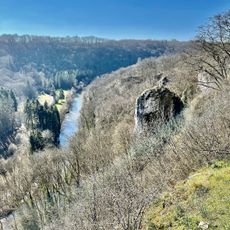
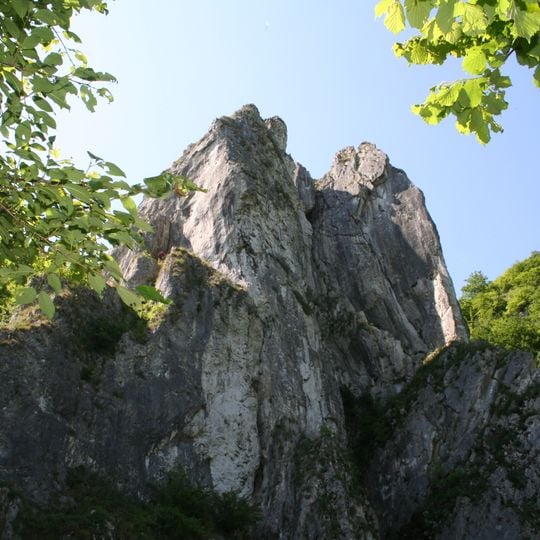
The Aiguilles de Chaleux are limestone cliffs rising alongside the Lesse river with distinctive vertical walls and stone pillars in various shades of grey. The formations showcase different patterns and textures created by natural geological processes over millions of years.
The rock mass was exposed by erosion, revealing the needles and especially the roche à la Chandelle. Climbing began in 1929, when Xavier de Grunne first ascended La Chandelle; King Albert I, his son Leopold III and Queen Astrid climbed there in the 1930s. In 1943 Haroun Tazieff fell spectacularly while climbing La Chandelle, which is now closed to climbing because of its instability. The site was listed on 4 April 1939 and 29 October 1981, and has been on Wallonia's exceptional heritage list since 2009.
The name "aiguilles" comes from the needle-like limestone points of the Condroz, such as the ridge called Le Chanbiru. The beach facing the rocks is a stop on the descent of the Lesse by kayak, and the summit of the Chaleux cirque, at 210 m, is reached on foot from Furfooz.
Designated paths allow visitors to observe the rock formations safely, though certain areas remain restricted for protection and safety reasons. Wear sturdy shoes and stay on marked trails, especially when conditions are wet or slippery.
La Chandelle is a rock blade only 80 cm thick, with two flat, parallel faces and two edges, rising 20 m above the ground; one face overhangs slightly. Xavier de Grunne, secretary-general of the Belgian Alpine Club, first climbed it in 1929, the year climbing began here. Haroun Tazieff fell from it in 1943, and climbing it is now banned because the rock is unstable.
The community of curious travelers
AroundUs brings together thousands of curated places, local tips, and hidden gems, enriched daily by 93,578 contributors worldwide.