Sacred pit of Garlo, Archaeological site in Breznik Municipality, Bulgaria.
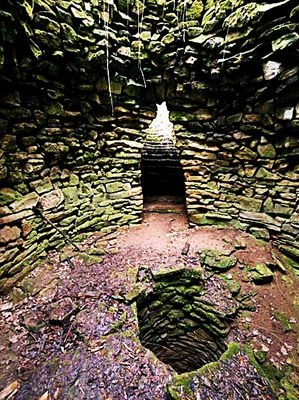
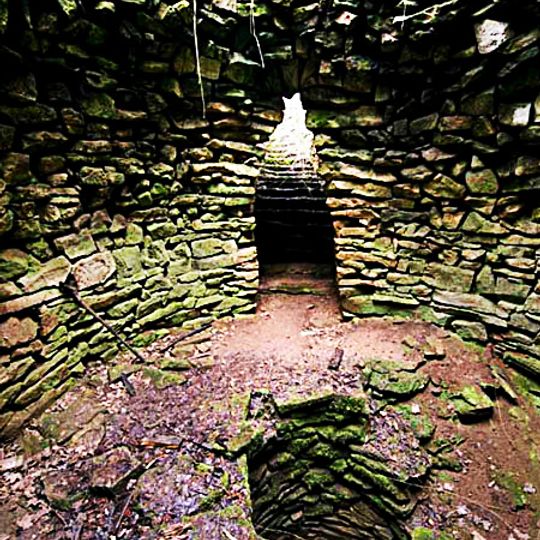
The Sacred Pit of Garlo is a late Bronze Age structure dug into a hillside, with a 24-step stone staircase 1.1 metres wide leading down to a circular vaulted chamber 4.2 metres in diameter. At its centre lies a well 5 metres deep, and a 2.3-metre circular opening in the vault lets in light. The entrance is on the east side, and the first nine steps are in the open air.
Excavated in 1972 by a team led by Prof. Dimitrina Mitova-Dzhonova, the site was dated to the 11th century BC through its near-identical match with the Funtana Coberta sacred well at Ballao, Sardinia. Mitova-Dzhonova linked it to an early phase of the Nuragic culture and visited Sardinian wells in 1982 to confirm the parallel. Animal bones found during excavation indicated a cultic, not funerary, function.
This site functioned as a sanctuary where ancient people gathered water and performed rituals in the underground chamber. The circular opening at the top allowed daylight to enter, transforming the space into a place for religious practices.
Access requires descending 24 steps total, with nine exposed to the elements outside and fifteen continuing below ground level. The interior is cool and dark, so proper footwear and caution on the stairs are necessary.
The construction method mirrors an ancient site in Sardinia almost identically, suggesting trade and cultural exchange across the Mediterranean. This architectural parallel reveals how distant ancient peoples independently solved similar underground building challenges.
The community of curious travelers
AroundUs brings together thousands of curated places, local tips, and hidden gems, enriched daily by 94,610 contributors worldwide.