Basilica of the Holy Mother of God Eleusa, Nesebar, Byzantine church in Nesebar, Bulgaria.
The Basilica of the Holy Mother of God Eleusa is a Byzantine church in Nesebar featuring three naves, each with its own apse, plus a narthex entry space. The structure also has two smaller apses on the north and south sides that complement the main architectural design.
Built in the first half of the 5th century on the northern shore of the Nesebar peninsula, the basilica is documented until the 14th century as part of a monastery complex. Its northern aisle and part of the central nave later sank into the sea, and the building is presumed destroyed by an earthquake. Archaeological excavations led by Ivan Velkov began in 1920; the church is now conserved and partly restored.
The name Eleusa comes from Byzantine tradition and means 'the Tender', reflecting how medieval Bulgarian Orthodox Christians honored the Virgin Mary. This title still shapes how visitors understand the spiritual purpose of this ancient place of worship.
The site is easy to reach and comfortable walking shoes are recommended since the ruins are uneven and some areas are near the water's edge. Local information signs help with orientation, and it's useful to check current access conditions before visiting to understand which areas are safely viewable.
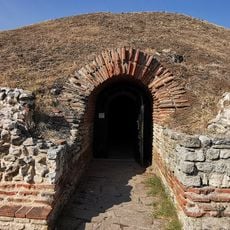
The narthex still holds vaulted tombs, a detail many visitors walk past on the way to the apses. Excavation of the site began in 1920 under the Bulgarian archaeologist Ivan Velkov, who also worked on other monuments of Nesebar. The basilica is 28 m long and 18 m wide, with two small apses on the north and south sides flanking the three main ones.
The community of curious travelers
AroundUs brings together thousands of curated places, local tips, and hidden gems, enriched daily by 94,192 contributors worldwide.