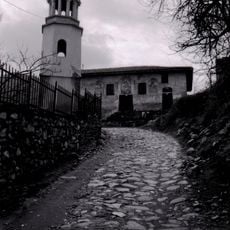
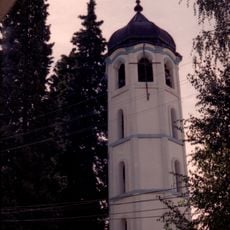
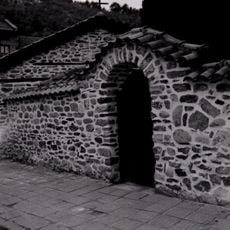
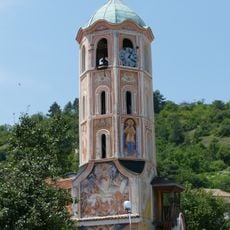
Church of the Holy Mother of God, Asen's Fortress, Byzantine church in Asen's Fortress, Bulgaria
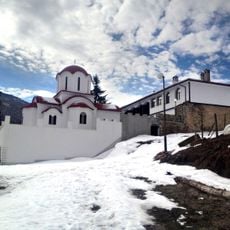
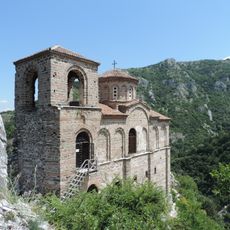
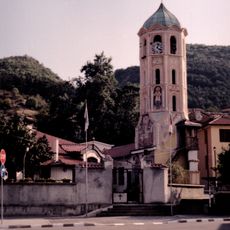
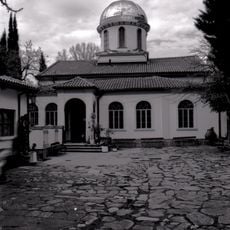
The Church of the Holy Mother of God measures about 18 m long, 7 m wide and 12 m high, with walls 0.85–1.15 m thick built of stone bands and three rows of brick. It has two storeys: the upper church proper with a single elongated nave, dome and five-sided apse, and a lower storey of unclear purpose. A small narthex to the west is topped by a rectangular tower.
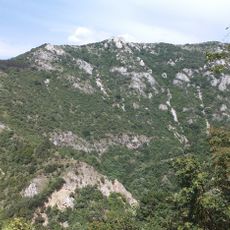
The place of worship emerged between the 11th and 13th centuries as part of a medieval fortification system that controlled important trade routes through the Rhodope Mountains. The fortress complex served as a strategic point protecting a region of considerable economic and military value.
The church's name comes from a partial medieval Greek inscription once read as "ή παναγία τῆς Πετριζηώτης", the title of the katholikon at Bachkovo Monastery, so the dedication may be a donor's reference rather than the building's own name. In 1899 Greek residents of Asenovgrad held a night procession here after a man reported lights and chants at the abandoned church; a Bulgarian procession followed years later.
The site is easily reached on foot by following marked pathways within the fortress and remains open to visitors throughout the year. The walking routes are generally passable, though the terrain is naturally uneven and sturdy footwear is advisable.
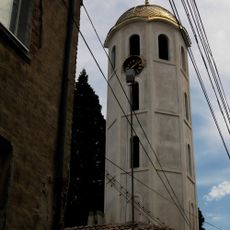
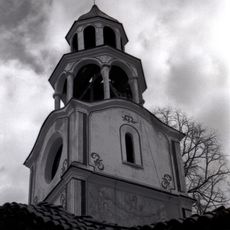
The rectangular tower above the narthex represents the first known integration of a bell tower into church architecture across the entire Balkan region. This feature made the building a model for later religious structures in the area.
The community of curious travelers
AroundUs brings together thousands of curated places, local tips, and hidden gems, enriched daily by 94,172 contributors worldwide.