Balchik Palace, Royal summer palace and botanical garden in Balchik, Bulgaria
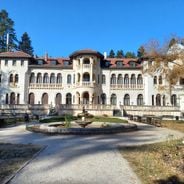
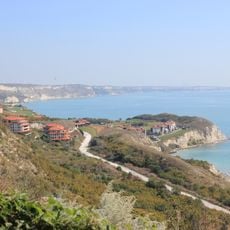
Balchik Palace is a white-walled villa with red tiled roofs, built across three terraces above the Black Sea, with a slender white minaret rising beside it. Its main facade is white above and rough stone below, with small-paned windows; to the right a lower block with an octagonal domed section and a wooden balcony stands over a stone retaining wall. The complex also holds the Stella Maris chapel, a smoking room, a cellar and villas.
Queen Marie of Romania chose this site after Southern Dobruja was annexed in 1913, partly to mark the territory as Romanian. The villa, designed by architect Emil Guneș, was built between 1926 and 1930 by Italian firms under Gaëtan Denise. The wider complex was expanded until 1938, reaching 244.8 decares. After the 1940 Treaty of Craiova returned the area to Bulgaria, the palace passed to the Bulgarian royal family; Soviet troops looted it in 1944.
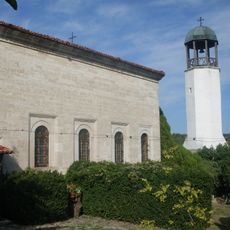
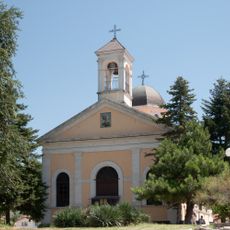
Queen Marie called the villa Tenha Yuva, Turkish for "Quiet Nest", a name linked to her interest in the Bahá'í faith taught to her by the American Martha Louise Root. She built three places of prayer on the grounds: an Anglican church, a Bahá'í temple named Maria Ruh, and the Orthodox chapel Stella Maris, whose interior was painted in 1930 by local painters A. Damian and Papatriandafilos.
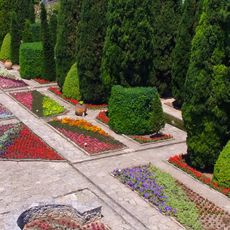
The site may require separate entrances for the palace and botanical garden depending on your visit plans. The best time to visit is from May to July when plants are in full bloom and the grounds look their most colorful.
The garden became a botanical one in the 1960s, when it passed into the custody of Sofia University. Its water comes from the springs Byal Kladenets and Chatal Cheshma, which once drove the wheels of the mills that gave the spot its old name, the Three Mills.
The community of curious travelers
AroundUs brings together thousands of curated places, local tips, and hidden gems, enriched daily by 94,072 contributors worldwide.