Неолитно селище край село Оходен, Neolithic settlement and archaeological site in Ohoden, Bulgaria
This Neolithic settlement near Ohoden comprised multiple dwellings, a central sanctuary, and a burial ground located in the Valoga area near Vratsa. The site displays numerous post holes up to 45 centimeters in diameter, revealing evidence of deliberate architectural construction during the prehistoric era.
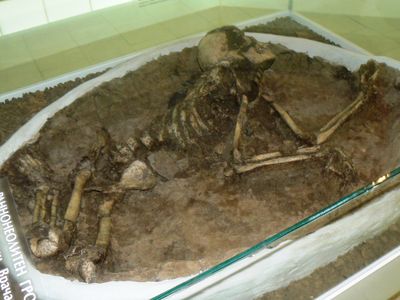
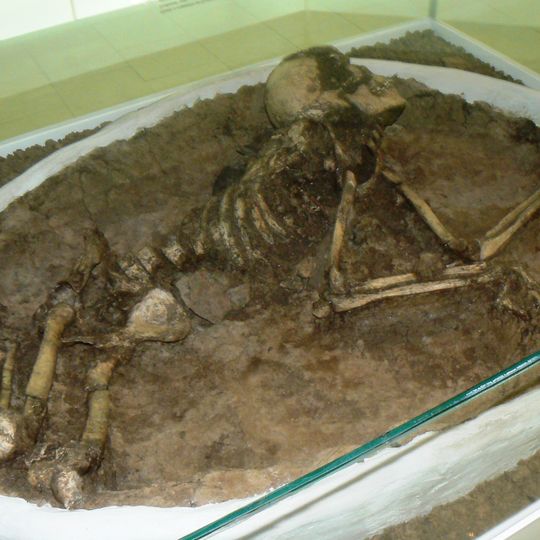
The settlement dates to the 6th millennium BCE and belongs to the early Neolithic Gradeshnitsa-Karcha culture, which spread between the Yantra and Timok rivers and into Oltenia. Excavations by the Vratsa Regional History Museum began in 2002 under archaeologist Georgi Ganetsovski. In 2004 the first grave, a woman nicknamed "Todorka", was found; further burials and a sanctuary with deer antlers followed in 2010 and 2011.
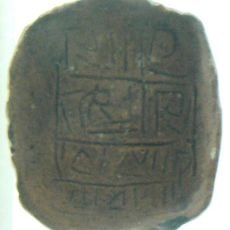
The sanctuary's floor was paved with stones laid in a P-shape pointing east toward sunrise, and dozens of clay and stone discs found there were read by early farmers as sun symbols. Archaeologists link this to one of the earliest temples to the sun, with no known parallel worldwide. A 2011 find added an altar decorated with large trophy deer antlers, placed about 2 m from a ritually laid male skeleton unearthed in 2010.
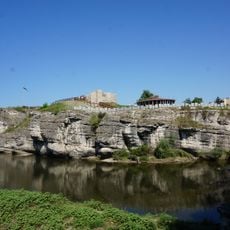
The excavation site is located in a rural setting and is most accessible during the warmer months when the digging work is visible. Visitors should wear sturdy shoes for uneven ground and look for interpretive markers that explain the key features of the settlement.
Researchers found obsidian tools that came from sources in Hungary and Armenia, showing ancient trade networks stretched across the continent. These precious materials reveal how people exchanged goods over thousands of kilometers.
The community of curious travelers
AroundUs brings together thousands of curated places, local tips, and hidden gems, enriched daily by 94,904 contributors worldwide.