Quebec Bridge, Cantilever bridge in Quebec, Canada
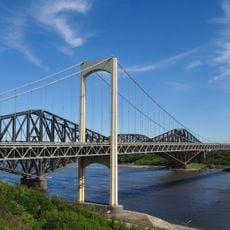
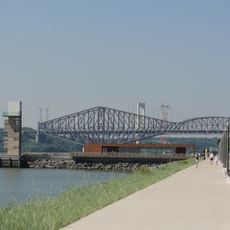
The Quebec Bridge is a riveted-steel truss cantilever bridge over the Saint Lawrence River between Quebec City and Lévis. Its two cantilever arms, 177 metres long, support a 195-metre central structure, giving a main span of 549 metres. The steel latticework, dark reddish-brown with visible rivet lines, rests on massive stone piers; the deck is 29 metres wide and the structure rises 104 metres above the water.
Construction began in the early 20th century and suffered two major collapses in 1907 and 1916. Work was finally completed in December 1919 after 88 workers died during the building process.
Mohawk ironworkers from Kahnawake made up 33 of the 76 men killed in the 1907 collapse; they are buried there under crosses made from steel beams of the fallen bridge. A monument built from the same metal stands in the Saint-Romuald cemetery, and at low tide scrap from the wreck can still be seen on the riverbank.
The bridge carries three highway lanes, one rail line and a pedestrian walkway between Quebec City and Lévis, about 10 km from each city centre. It stands just under 200 m upstream of the Pierre-Laporte bridge, the easternmost complete crossing of the Saint Lawrence. The walkway lets pedestrians cross on foot; the rail line is for trains, not visitors.
The 549-metre main span was not required by shipping clearance: consulting engineer Theodore Cooper widened the distance between the main piers from 488 to 549 metres without having the plans recalculated, so the bridge would hold the world record for a cantilever span.
The community of curious travelers
AroundUs brings together thousands of curated places, local tips, and hidden gems, enriched daily by 92,772 contributors worldwide.