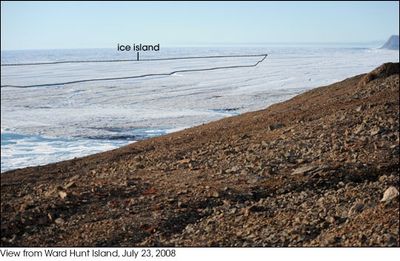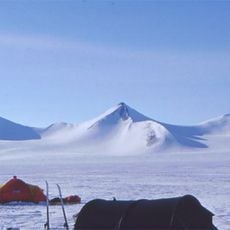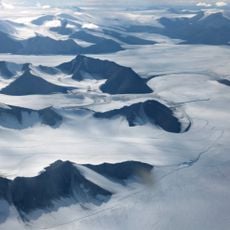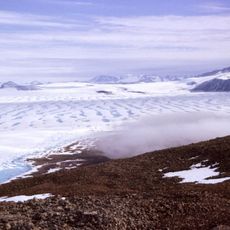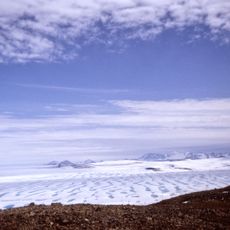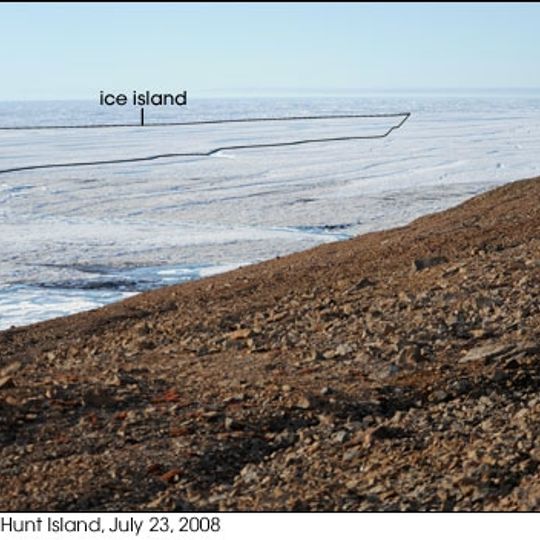
Ward Hunt Island, Arctic island in Quttinirpaaq National Park, Canada
Ward Hunt Island is an Arctic island positioned roughly 750 kilometers south of the North Pole, stretching several kilometers across the landscape. It holds a small research station with transportable structures designed specifically for fieldwork in harsh Arctic conditions.
The island was first discovered in 1876 during a British polar expedition and named after a naval official. Since that initial encounter with European explorers, it has held an ongoing role in Arctic scientific investigations.
The station serves as a working hub for scientists studying Arctic processes, and visiting researchers experience how people adapt and function in one of Earth's harshest environments. The shelters and equipment are arranged to support this demanding fieldwork in a remote location.
Visitors need specialized equipment and transportation since the nearest human settlement is hundreds of kilometers away, making access quite limited. Weather and ice conditions dictate when travel is possible, so flexibility in planning is essential.
The station operates automated monitoring instruments that collect data throughout the year about Arctic conditions and contribute valuable information for understanding climate patterns. This continuous data gathering happens without requiring constant human presence.
The community of curious travelers
AroundUs brings together thousands of curated places, local tips, and hidden gems, enriched daily by 90,824 contributors worldwide.