Ellesmere Ice Shelf, Ice shelf in Nunavut, Canada.
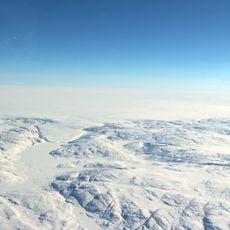
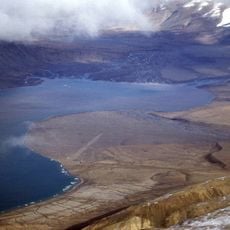
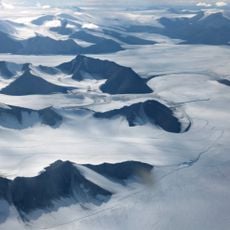
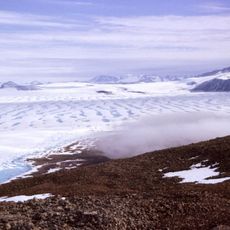
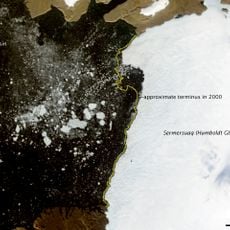
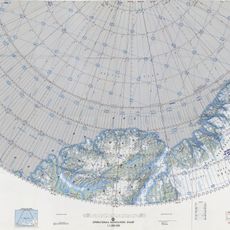
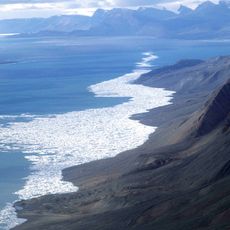
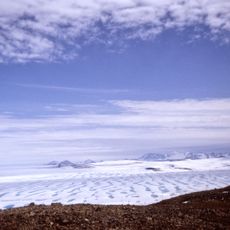
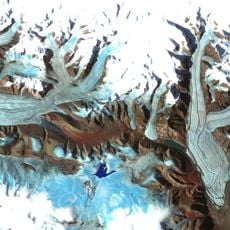
Ellesmere Ice Shelf is a vast expanse of floating ice along the northern coast of Ellesmere Island, stretching across the Arctic seascape. The formation now exists as separate sections rather than one continuous body, spreading across this remote northern region.
The ice was first documented in 1875 when a British expedition explored it during a journey along the northernmost coasts. It remained a connected mass for centuries before breaking apart into separate sections during the 1900s.
For Inuit communities in the region, ice has long been integral to navigation and survival strategies passed down through generations. Local knowledge about ice patterns and seasonal shifts remains important for understanding how people moved through this landscape.
Access to the area is only possible during warmer months with specialized equipment and preparation, as extreme cold and remoteness present major challenges. Visitors should understand this is a location for professionals and researchers, not typical tourists.
The original ice mass existed for thousands of years as one continuous whole before it fragmented into pieces. This shift shows how rapidly conditions in the Arctic can change and how these transformations are recorded in the landscape itself.
The community of curious travelers
AroundUs brings together thousands of curated places, local tips, and hidden gems, enriched daily by 90,825 contributors worldwide.