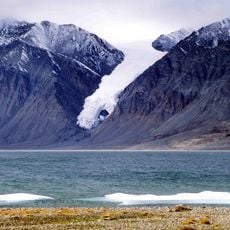
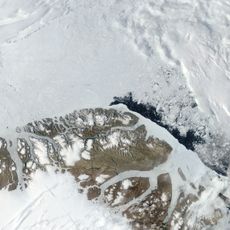
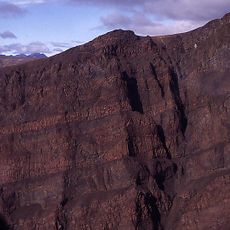
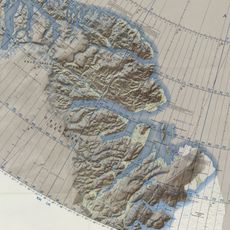
Ward Hunt Ice Shelf, Arctic ice shelf in Nunavut, Canada
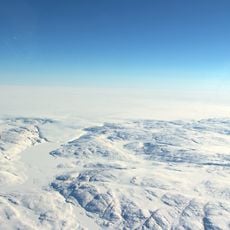
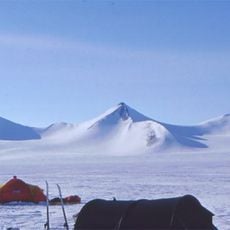
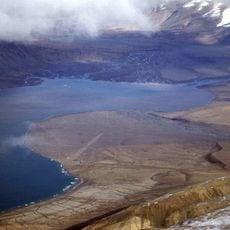
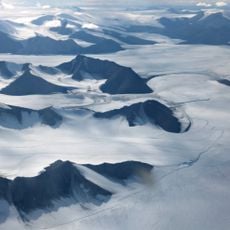
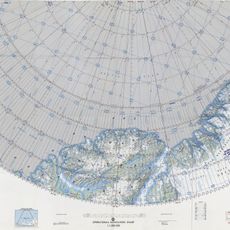
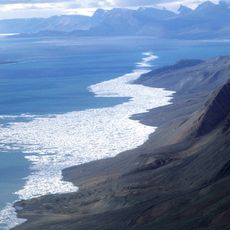
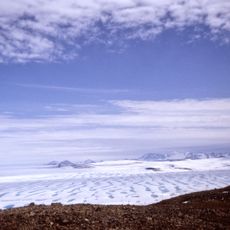
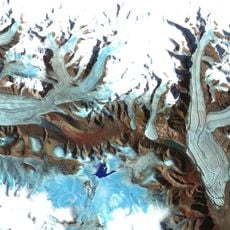
The Ward Hunt Ice Shelf is the largest ice shelf in the Arctic, about 400 km2 (150 sq mi) in size, attached to the north coast of Ellesmere Island, Nunavut, near Ward Hunt Island. It is the largest remnant of the Ellesmere Ice Shelf, which broke into six shelves during the 20th century, and has been in place for roughly 4,000 years.
British explorers first documented this ice formation during their 1875 to 1876 expedition to northwestern Ellesmere Island. In 2002, the shelf fractured dramatically and released massive amounts of freshwater, revealing how quickly Arctic conditions can shift.
The shelf appears in Al Gore's 2007 documentary An Inconvenient Truth, which brought the Ellesmere ice shelves to a global audience. The 2002 split released the freshwater of an epishelf lake in Disraeli Fjord, the largest such lake in the Northern Hemisphere. The icebergs calved since then are noted as a hazard to shipping and offshore development.
Reaching this location requires specialized aircraft or helicopters since no roads or harbors exist in the area. Visitors should expect extreme cold, continuous ice, and extended darkness during certain seasons.
The 2002 split drained the largest epishelf lake in the Northern Hemisphere, held in Disraeli Fjord behind the shelf. The released freshwater also carried away microbial ecosystems, a loss with possible far-ranging ecological effects. Al Gore mentions the shelf in his 2007 film An Inconvenient Truth.
The community of curious travelers
AroundUs brings together thousands of curated places, local tips, and hidden gems, enriched daily by 93,794 contributors worldwide.