Chest opened
+${chestReward.xp} XP
Explorer
NOUVEAU ×${chestReward.collectible.quantity}
tapez pour fermer

See the monuments around you in AR Open chests in the app

Around Us is built for your phone — point your camera at the streets and discover the monuments and places around you in augmented reality. Around Us is built for your phone — chests unlock when you walk, explore and capture nearby places.

•

Enable Location

We need your location to show you interesting places around you

Discover nearby places

Find interesting locations and hidden gems around you

Precise directions

Get accurate directions and distances to places

Your location is never shared with other users. It's only used when you tap the location button.

Sirius Passet

Log in to your account

Start exploring — it's free

Trusted by 93,516 travelers worldwide

Continue with Google
Continue with Apple
or

We will send you a code to connect

By continuing, you accept our Terms and Conditions and our Privacy Policy

Check your inbox

We've sent a pincode in your inbox. Please enter the code below.

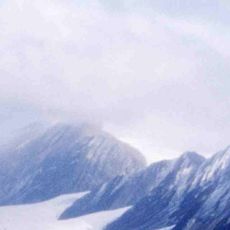
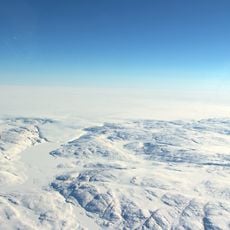
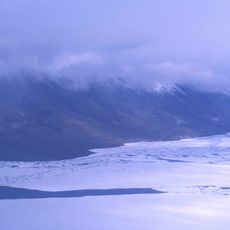
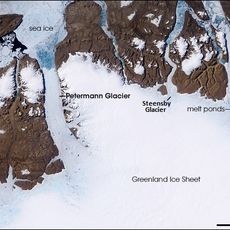
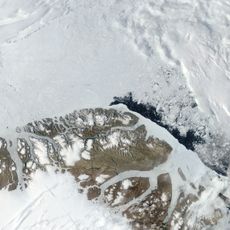
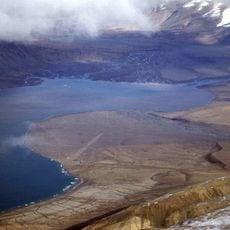
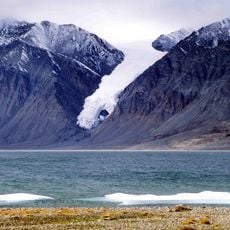
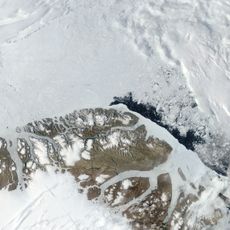
Sirius Passet, Paleontological site in Peary Land, Greenland.

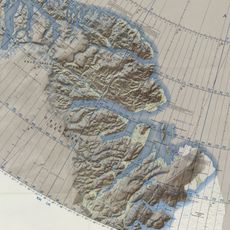
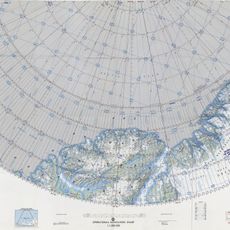
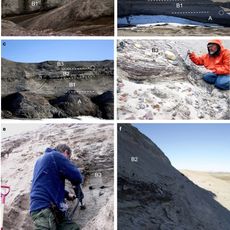
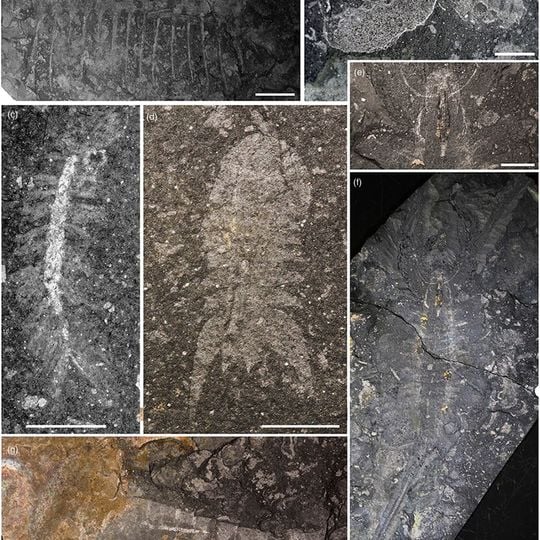
Sirius Passet is a fossil site in the Buen Formation on the east shore of J.P. Koch Fjord in Peary Land, northern Greenland. Its dark grey and black rocks, about 518 million years old, hold flattened, segmented animals with spiny appendages, preserved as lighter grey or beige traces. The site comprises six places in Nansen Land.

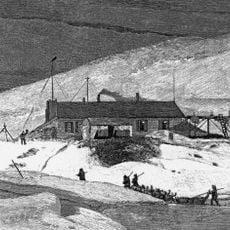
A. Higgins of the Geological Survey of Greenland found sponge fossils at the site in 1984. Simon Conway Morris and others published a preliminary account in 1987, and expeditions led by J. S. Peel and Conway Morris returned from 1989 onward. A field collection of perhaps 10,000 fossil specimens has been amassed.

The name comes from the Sirius sledge patrol that operates in North Greenland. In October 2022 the International Union of Geological Sciences listed the 'Cambrian Explosion in Sirius Passet' among its 100 geological heritage sites, citing its reference value for the history of geological sciences.

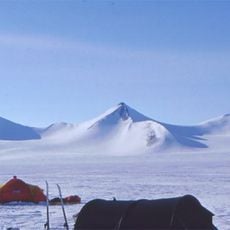
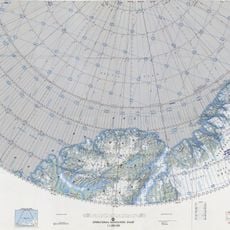
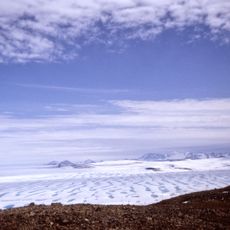
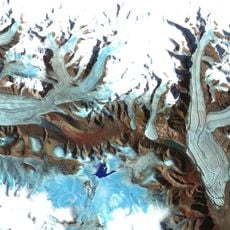
The site lies at 82°47′ N on the east shore of J.P. Koch Fjord in Nansen Land, Peary Land, reachable only by air and then overland in the High Arctic. Fieldwork has been limited to about nine expeditions since 1984, mostly in summer. Access requires cold-weather gear and helicopter or ski-plane logistics; the terrain is rocky and the weather changes fast.

The fossils include Kerygmachela and Pambdelurion, two panarthropods that feature in debates about the origin of modern animal phyla. The site also yielded Halkieria, a problematic taxon, and many specimens lack eyes. The fossils lie in the Buen Formation and were named after the Sirius sledge patrol of North Greenland.

The community of curious travelers

AroundUs brings together thousands of curated places, local tips, and hidden gems, enriched daily by 93,516 contributors worldwide.

Start exploring
GPS coordinates
82.79333,-42.24500
Latest update
October 29, 2026 12:21
Reviews
Share your experience

No review yet

Discussions
Start a discussion...

No discussion yet

« Sirius Passet - Paleontological site in Peary Land, Greenland » is provided by Around Us (aroundus.com). Images and texts are derived from Wikimedia project under a Creative Commons license. You are allowed to copy, distribute, and modify copies of this page, under the conditions set by the license, as long as this note is clearly visible.

Discover hidden gems everywhere you go!

From secret cafés to breathtaking viewpoints, skip the crowded tourist spots and find places that match your style. Our app makes it easy with voice search, smart filtering, route optimization, and insider tips from travelers worldwide. Download now for the complete mobile experience.

Around Us App Screenshot
❝

A unique approach to discovering new places❞

— Le Figaro

❝

All the places worth exploring❞

— France Info

❝

A tailor-made excursion in just a few clicks❞

— 20 Minutes

Around Us
Travel Guide & Maps
Download

Send to your phone

QR Code
1

Open the camera app on your mobile.

2

Point at the QR code with your camera. A notification will appear.

3

Tap the notification to open the link.