St. Peters Canal, Canal and national historic site in Richmond County, Canada
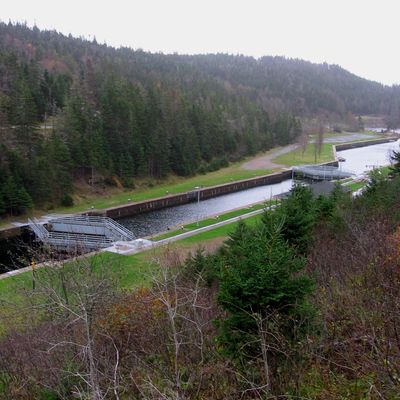
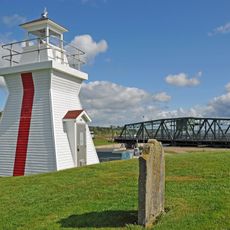
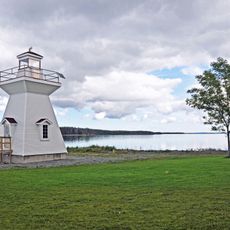
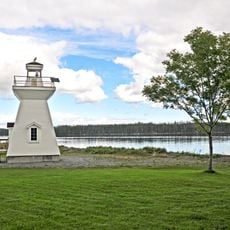
St. Peters Canal is an artificial waterway that cuts roughly 800 meters through a granite ridge, connecting St. Peters Inlet of Bras d'Or Lake to St. Peters Bay opening onto the Atlantic Ocean. The waterway is about 30 meters wide and serves as a navigable shortcut that boats use to avoid lengthy coastal travel.
Construction of the waterway began in 1854 and concluded in 1869, replacing an ancient portage trail that indigenous peoples and French fur traders had relied upon for centuries. The completion of this engineering project transformed maritime travel throughout the region by providing a direct passage between two distinct water systems.
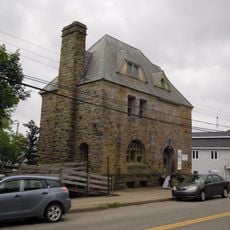
The Mi'kmaq long portaged their canoes across this isthmus before any canal existed. In 1650 the French fur trader Nicholas Denys set up a "haulover road" over the same crossing, and the village of St. Peter's later grew beside it. The lockmaster's house, built in 1876, is a recognized heritage building.
The waterway operates from May through October under the care of Parks Canada, which maintains the navigation channels and facilities. A lock system manages the different water levels at each end, allowing various sized vessels to pass through safely.
The waterway features a rare double-gate lock design that is the only one of its kind in North America, specifically engineered to handle the contrasting tidal patterns between lake and ocean water. This unusual construction was essential because the two bodies of water experience completely different water level changes throughout the day.
The community of curious travelers
AroundUs brings together thousands of curated places, local tips, and hidden gems, enriched daily by 93,792 contributors worldwide.