Chest opened
+${chestReward.xp} XP
Explorer
NOUVEAU ×${chestReward.collectible.quantity}
tapez pour fermer

See the monuments around you in AR Open chests in the app

Around Us is built for your phone — point your camera at the streets and discover the monuments and places around you in augmented reality. Around Us is built for your phone — chests unlock when you walk, explore and capture nearby places.

•

Enable Location

We need your location to show you interesting places around you

Discover nearby places

Find interesting locations and hidden gems around you

Precise directions

Get accurate directions and distances to places

Your location is never shared with other users. It's only used when you tap the location button.

Fort William Augustus

Log in to your account

Start exploring — it's free

Trusted by 92,622 travelers worldwide

Continue with Google
Continue with Apple
or

We will send you a code to connect

By continuing, you accept our Terms and Conditions and our Privacy Policy

Check your inbox

We've sent a pincode in your inbox. Please enter the code below.

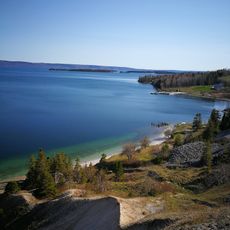
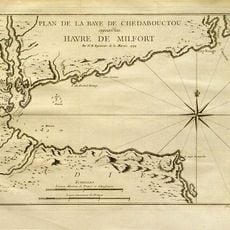
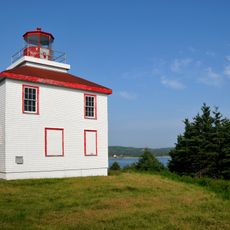
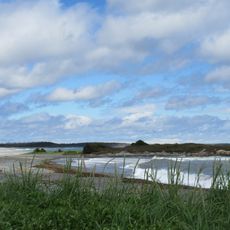
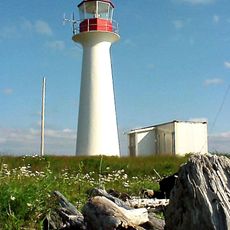
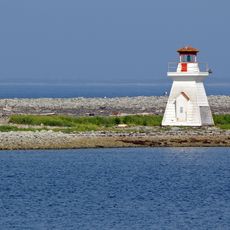
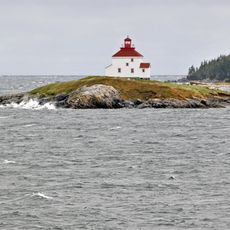
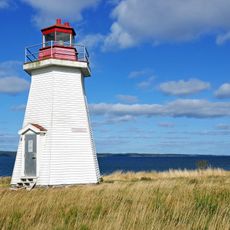
Fort William Augustus, Fort and national historic site on Grassy Island, Canso, Canada

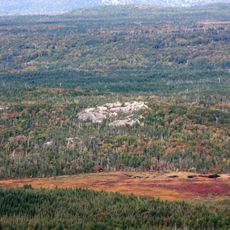
Fort William Augustus stands on Grassy Island off Canso, where remains of the 1720 redoubt, the 1723–24 fort, and the 1735 blockhouse are still visible. The site was recognized as a National Historic Site of Canada in 1962.

New Englanders began building Fort William Augustus on Grassy Island in 1720, during the lead-up to Father Rale's War; the permanent structure broke long-standing Mi'kmaq–British American agreements. On 7 August 1720, 60–75 Mi'kmaq and French fishermen from Petit de Grats attacked the unfinished fort, killing three men and wounding four. A twelve-gun blockhouse followed the 1723 raid, and the French and Mi'kmaq destroyed the fort in the 1744 Raid on Canso during King George's War.

The fort's name honours Prince William, Duke of Cumberland, son of George II. The site is also called Fort Phillips after Governor Richard Philipps, and Grassy Island Fort after its location. The 1720 construction broke long-standing agreements between the Mi'kmaq and British Americans, a grievance that fed into Father Rale's War.

Access to the fort requires a boat from the mainland since it sits on an island. The Parks Canada visitor center in Canso provides information and exhibits to help you understand the site's history and archaeological findings.

The fort was first called Fort Phillips, after Governor Richard Philipps, and was also known as Grassy Island Fort. It was named William Augustus after Prince William, Duke of Cumberland, son of George II. On the site remain traces of the 1720 redoubt, the 1723–24 fort and the 1735 blockhouse.

The community of curious travelers

AroundUs brings together thousands of curated places, local tips, and hidden gems, enriched daily by 92,622 contributors worldwide.

Start exploring
Location
Part of
Canso Islands
GPS coordinates
45.33731,-60.97301
Latest update
October 24, 2026 22:06
Reviews
Share your experience

No review yet

Discussions
Start a discussion...

No discussion yet

« Fort William Augustus - Fort and national historic site on Grassy Island, Canso, Canada » is provided by Around Us (aroundus.com). Images and texts are derived from Wikimedia project under a Creative Commons license. You are allowed to copy, distribute, and modify copies of this page, under the conditions set by the license, as long as this note is clearly visible.

Discover hidden gems everywhere you go!

From secret cafés to breathtaking viewpoints, skip the crowded tourist spots and find places that match your style. Our app makes it easy with voice search, smart filtering, route optimization, and insider tips from travelers worldwide. Download now for the complete mobile experience.

Around Us App Screenshot
❝

A unique approach to discovering new places❞

— Le Figaro

❝

All the places worth exploring❞

— France Info

❝

A tailor-made excursion in just a few clicks❞

— 20 Minutes

Around Us
Travel Guide & Maps
Download

Send to your phone

QR Code
1

Open the camera app on your mobile.

2

Point at the QR code with your camera. A notification will appear.

3

Tap the notification to open the link.