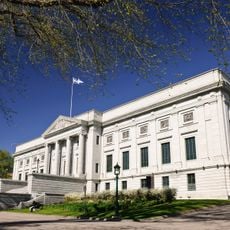
Pavillon Charles-Baillairgé, Art museum in Plains of Abraham, Canada.
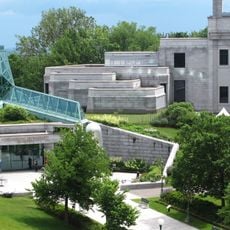
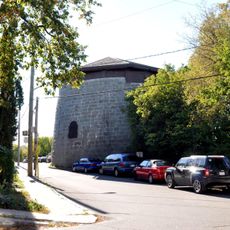
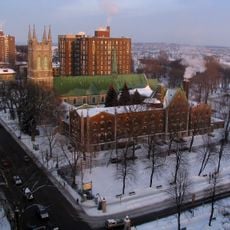
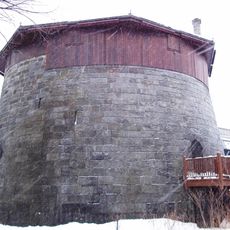
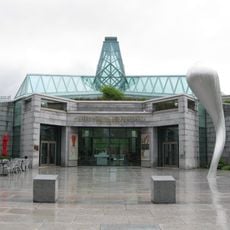
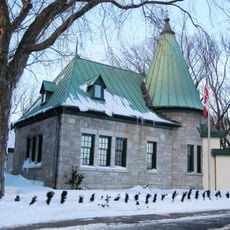
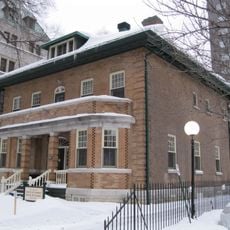
Pavillon Charles-Baillairgé is a former prison built between 1861 and 1867 to plans by architect Charles Baillairgé, now part of the Musée national des beaux-arts du Québec. Its stone wings radiate from a central block, and its octagonal watchtower was Quebec City's tallest structure until the Château Frontenac rose from 1892.
The structure was built in 1861 as a prison following British reform principles for penitentiary design. After more than a century of operation as a correctional facility, it closed in 1970 and was later transformed into a museum.
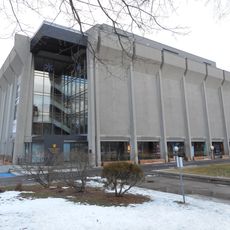
The pavilion bears the name of Charles Baillairgé, the architect who designed it and whose family spanned four generations of architects and sculptors. He trained under his father's cousin Thomas Baillairgé and received his competency certificate in 1846. The building now forms part of the Musée national des beaux-arts du Québec complex.
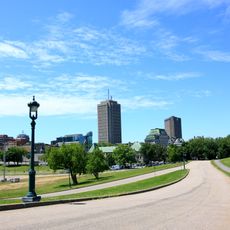
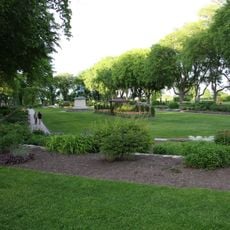
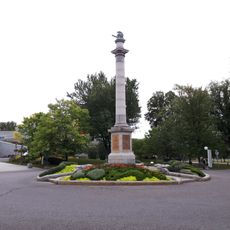
The pavilion has been closed to visitors since 4 April 2022, so check the museum's current opening information before planning a stop. It stands on the Plains of Abraham near the Wolfe monument, within walking distance of the rest of the Musée national des beaux-arts du Québec complex.
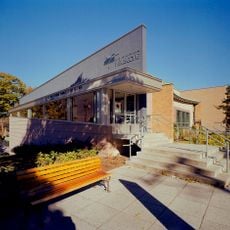
The building preserves intact cell blocks from its time as a prison, situated directly alongside modern art exhibitions. This spatial proximity offers visitors an uncommon direct contrast between the location's dark past and its transformation into a creative space.
The community of curious travelers
AroundUs brings together thousands of curated places, local tips, and hidden gems, enriched daily by 92,814 contributors worldwide.