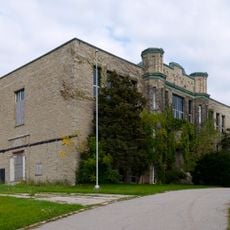
Wellington County House of Industry and Refuge, National historic site in Centre Wellington, Canada.
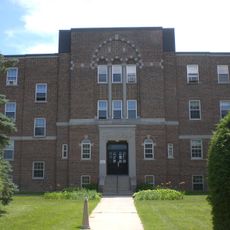
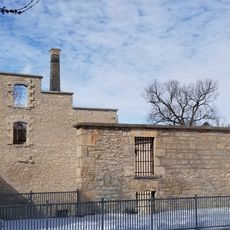
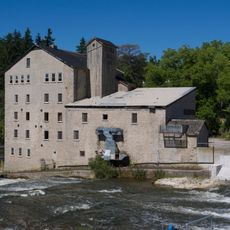
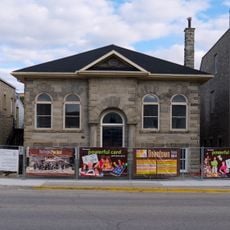
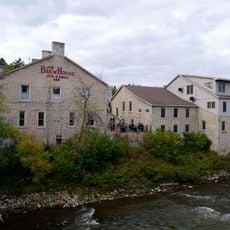
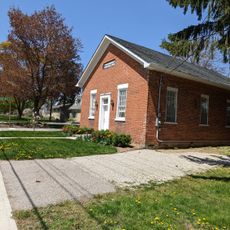
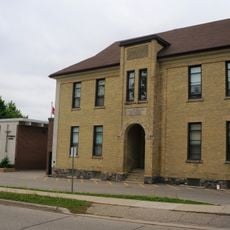
Wellington County House of Industry and Refuge is a two-story stone building from the late 1800s situated on a hilltop beside the Grand River in Ontario. The facility provided shelter and work for destitute individuals and has been converted into a museum that now displays exhibits about the area's past and how social services evolved.
The House of Industry opened in 1877, built on 50 acres between Fergus and Elora after Wellington County Council bought the land in 1876. It served as a poorhouse until 1947, when it became the Wellington County Home for the Aged; that home closed in 1971. A hospital wing was added in 1893 at the urging of physician Dr. Abraham Groves, and a rear addition followed in 1955.
The building reflects how the community once managed poverty through institutional care, bringing together people who had nowhere else to turn. Visitors can observe how this place functioned as a central support hub in the region.
The site is best visited during daytime hours when the museum and exhibits are open to visitors. The building sits on a hillside with views toward the river, so plan for a short walk uphill to reach it.
The 1877 building was designed by Guelph architect Victor Stewart, who left town mid-construction; local architect C. J. Soule finished the job. Its five symmetrical pavilions, central belfry and bracketed cornice follow a plan common to public buildings of the British Empire. A porch was added to the main entrance in 1907, while the front and sides otherwise look as they did in 1877.
The community of curious travelers
AroundUs brings together thousands of curated places, local tips, and hidden gems, enriched daily by 92,798 contributors worldwide.