Lake Baldegg, lake in the Canton of Lucerne, Switzerland
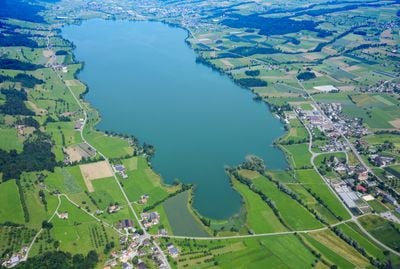
Lake Baldegg is a 5.3 km² lake in the southern Seetal valley of the canton of Lucerne, between the Erlosen ridge to the west and the Lindenberg to the east. Its surface lies at 463 m above sea level, and its bed reaches 397 m, giving a maximum depth of 66 m and a mean depth of 33 m. The Ron enters through the Ronfeld near Baldegg, and the Aabach leaves at the northern end.
Lake Baldegg occupies a basin carved and over-deepened by the Reuss glacier during the Ice Age; when the ice retreated, a buried dead-ice mass long blocked the valley floor from filling with river sediment. Neolithic and Bronze Age pile-dwelling finds put the lake on the Canton of Lucerne's list of cultural assets. From the 1920s, fertiliser and untreated sewage raised phosphorus levels; since 1982 it has been artificially aerated, the first lake in the world to be treated this way.
Lake Baldegg takes its name from the nearby village of Baldegg and has been part of local community life for generations. Residents and visitors use it for simple outdoor activities, and seasonal gatherings by the shore help people connect with friends and family in this quiet setting.
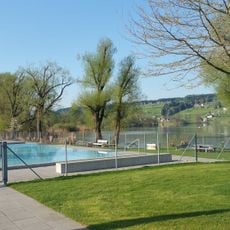
The lake is easily reached by road from Lucerne and offers simple walking paths along the shore accessible to visitors of all ages with soft ground and benches. The area remains open year-round, with warmer months allowing swimming and boating while quieter seasons suit peaceful walks.
Since 1982 Lake Baldegg has been artificially aerated, the first lake in the world to be treated this way. Compressed air is fed in at the lake bed, forcing the water to circulate in winter; phosphorus fell to about 26 mg/m³ by 2010, against a target of 15–20 mg/m³.
The community of curious travelers
AroundUs brings together thousands of curated places, local tips, and hidden gems, enriched daily by 93,544 contributors worldwide.