Aiguille d'Argentière, Mountain peak in Mont Blanc massif, France and Switzerland
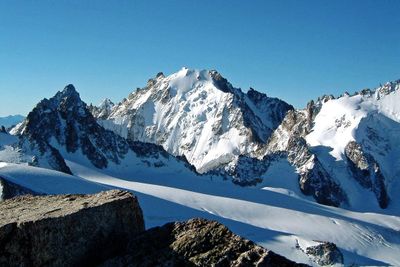
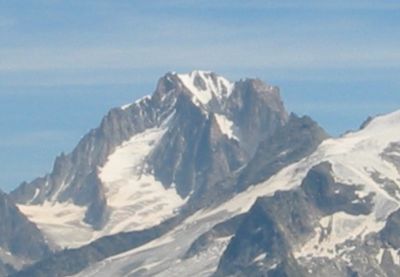
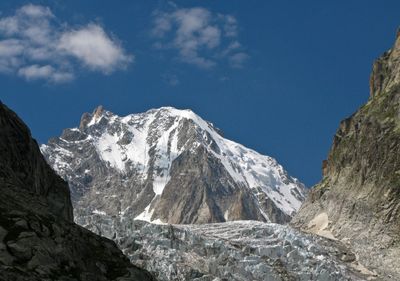
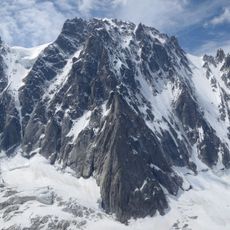
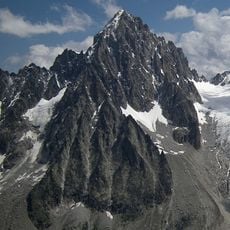
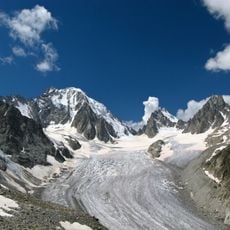
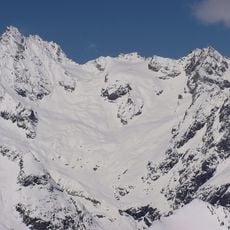
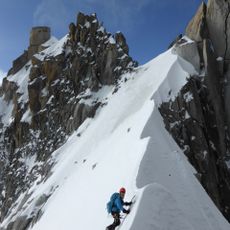
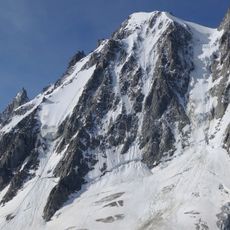
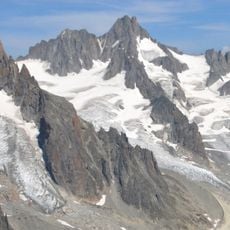
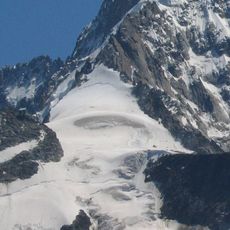
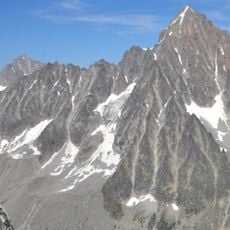
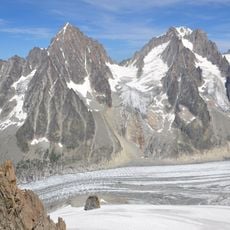
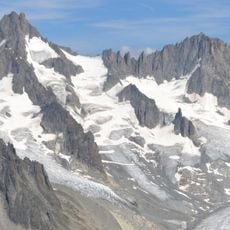
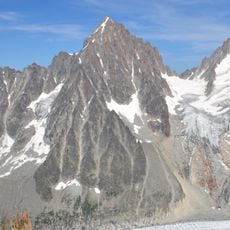
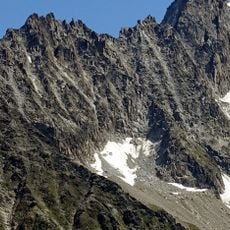
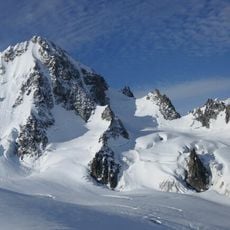
Aiguille d'Argentière is a 3,898-metre mountain on the France–Switzerland border in the Mont Blanc massif. Its upper part is dark grey rock streaked with snow and split by steep gullies, with two rocky points at the top and a small snowfield between them. A broad snow and ice slope fills the left and central flanks, while a dark rocky ridge descends steeply on the right. The lower secondary summit is Flèche Rousse, a prominent rock tower at 3,878 metres to the southeast.
Edward Whymper and A. Reilly, with guides Michel Croz, M. Payot and H. Charlet, made the first ascent on 15 July 1864, climbing the west flank and north-west ridge. Whymper had already climbed the Barre des Écrins and Aiguille Verte, and reached the Matterhorn the following year. In 2012 the French alpinist Stéphane Brosse died on the mountain; Tobias Haag died here in April 2006.
The name Argentière refers to the silver-grey granite of its faces. The secondary summit, Flèche Rousse, is a rock tower at 3,878 m southeast of the main summit. In 2012 the experienced French mountaineer Stéphane Brosse died on the mountain; Tobias Haag died here in April 2006.
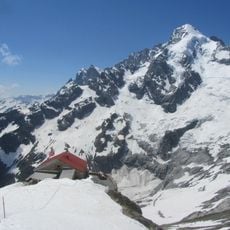
The usual approach follows the west flank and north-west ridge, the line taken by the first party in 1864. The Refuge d'Argentière, at about 2,771 m, serves as a base before the climb. The summit sits on the French-Swiss border, so plan the descent toward the side your transport leaves from.
The secondary summit, Flèche Rousse, is a rock tower reaching 3,878 metres, just southeast of the main summit. The mountain also claimed the life of the experienced French alpinist Stéphane Brosse in 2012, and of Tobias Haag, brother of extreme skier Sebastian Haag, in April 2006.
The community of curious travelers
AroundUs brings together thousands of curated places, local tips, and hidden gems, enriched daily by 93,933 contributors worldwide.