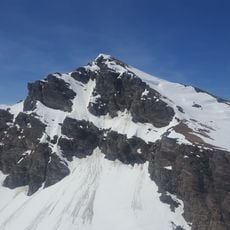
Septimer Pass, Mountain pass in Grisons, Switzerland
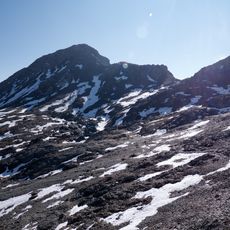
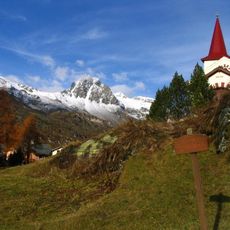
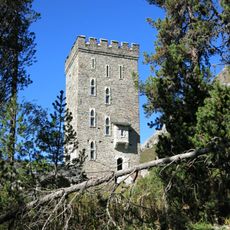
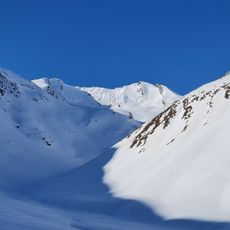
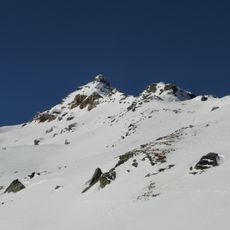
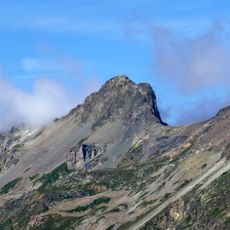
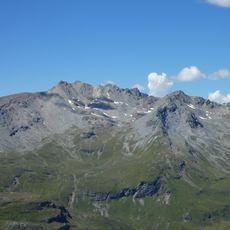
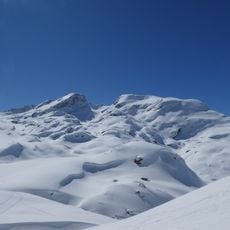
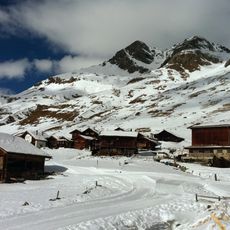
The Septimer Pass is a mountain crossing in Graubünden at 2,310 meters that links the Bregaglia valley with the Oberhalbstein valley. The paved path from 1387 and a later variant from around 1800 survive in sections, notably at the Säscel battü rock cutting and the Cranch switchbacks descending into Val Maroz. A Roman field camp from the Augustan era lies at 2,340 meters just above the pass road.
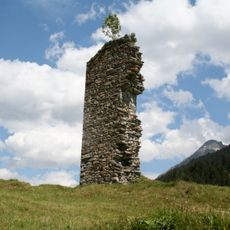
The pass was an important trade route in Roman times connecting Milan and Augsburg, with a military camp built around the 1st century near the summit. Later a hospice was established that sheltered travelers for nearly a thousand years before ceasing operations in the late 1700s.
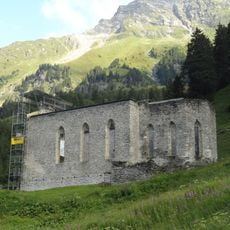
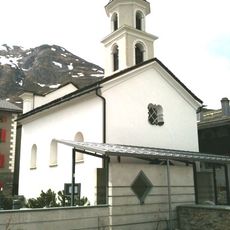
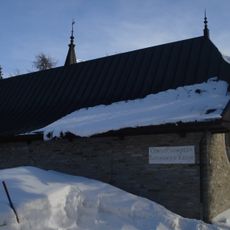
The pass name appears as Septimus around 1035, and the Romansh form Set in the late 14th century; folk etymology long linked it to Emperor Septimius Severus, while Michiel de Vaan reads it as Late Latin *Monte Saeptu, "protected mountain pass". Transport over the pass was organised by the Porten of Lenz, Tinizong, Stalla and Bergell-Sopraporta. The hospice St. Peter (Tgesa da Sett) with its chapel stood on the summit from around 1100.
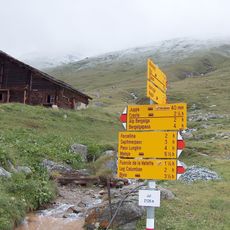
The pass lies about six kilometres from Bivio (1,769 m) and four kilometres from Casaccia (1,458 m). From the summit two further crossings branch off: the Forcellina (2,672 m) west into the Avers, the Lunghinpass (2,645 m) east into the Oberengadin. The area from Bivio up to the pass is a Swiss military firing and training ground, so check exercise times before hiking there.
On the pass height runs the European main watershed between the Rhine and Po drainage basins, not the North Sea and Adriatic. Two more passes can be crossed from here: the Forcellina (2,672 m) west into the Avers, and the Lunghinpass (2,645 m) east into the Oberengadin.
The community of curious travelers
AroundUs brings together thousands of curated places, local tips, and hidden gems, enriched daily by 92,654 contributors worldwide.