Gründjitobel Viaduct, arch bridge
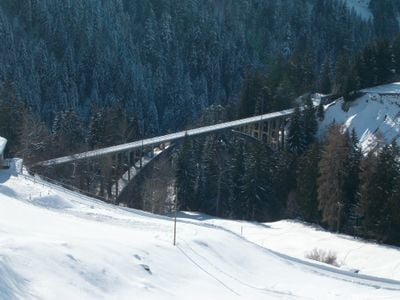
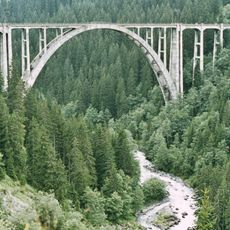
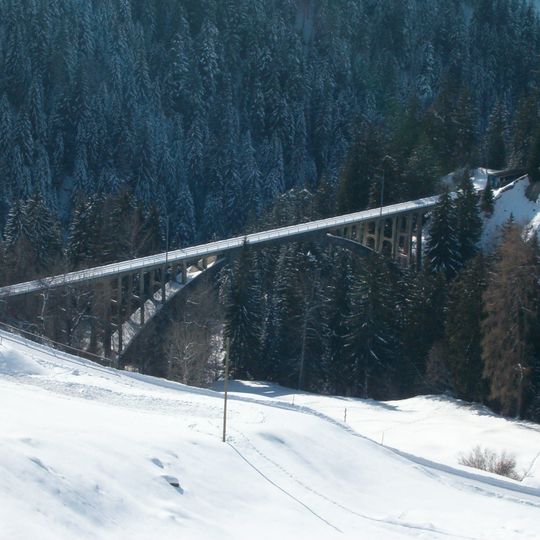
The Gründjitobel Viaduct is a reinforced concrete railway bridge in Langwies that spans a deep, eroded gorge with a single large arch about 86 meters long. The structure measures approximately 145 meters in length and stands about 46 meters above the valley floor, allowing trains to cross without numerous supports beneath it.
Construction began in June 1913 and was completed by July 1914, when engineers pioneered a new approach to overcome the unstable ground conditions of the gorge. The bridge marked a turning point in railway engineering, making the route between Chur and Arosa more direct and reliable.
The viaduct symbolizes the connection between remote mountain communities and the wider world. It stands as a reminder of how engineering helped bring isolated villages into contact with larger regions.
The viaduct is easily accessible from nearby walking paths, and viewing it from the railway itself provides the best perspective of its arch shape and engineering. Visitors can position themselves along trails below to see the bridge's profile against the rocky gorge and understand the terrain it crosses.
Designed by Hermann Schürch, the viaduct pioneered a bold engineering solution using a single large span instead of many smaller openings to avoid problems from the river below. This innovative approach set new standards for railway bridges in the early 1900s and influenced bridge design for decades to come.
The community of curious travelers
AroundUs brings together thousands of curated places, local tips, and hidden gems, enriched daily by 91,128 contributors worldwide.