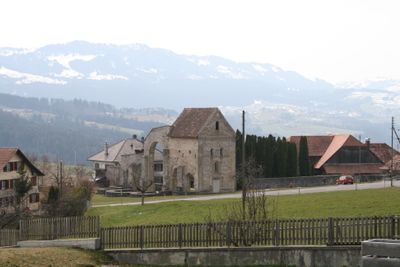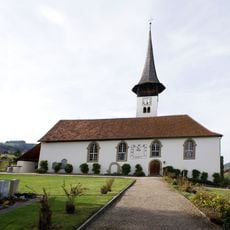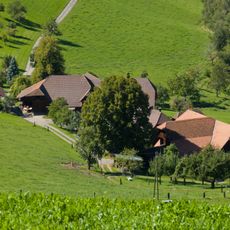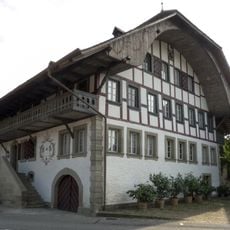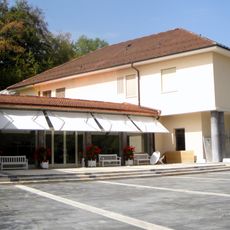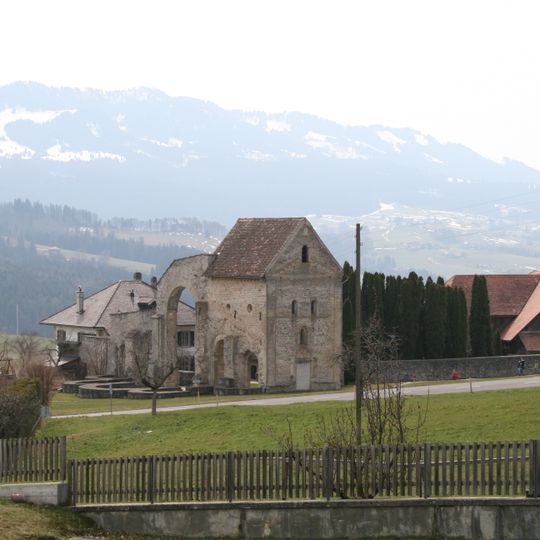
Ruin of the former Cluniac church and outbuildings, Medieval monastery ruins in Rüeggisberg, Switzerland
The former monastery in Rüeggisberg displays stone foundations and remaining walls with characteristic Romanesque features like rounded arches and sturdy pillars. The ground layout reveals how the complex was divided among a church, residential quarters, and farm buildings that supported daily monastic life.
Lütold of Rümligen granted the site and its estates to Cluny Abbey between 1072 and 1076, making it the first Cluniac house in the German-speaking world; the first cells were built under Cuno of Siegburg and Ulrich of Zell. The Romanesque church was built from about 1100 to about 1185. In 1484 the priory was incorporated into the new college of Augustinian Canons at Bern Minster, and the church was closed in 1541 during the Reformation.
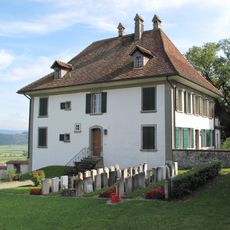
Each November an Advent market fills the ruins, and open-air plays and concerts have been staged among the walls. Between Easter and September, services are still held monthly in the former church. The north transept stored the peasants' grain tithes after the Reformation, while the south wing housed the village pastor.
The ruins are open to the public but may be reserved for picnics or gatherings. Between Easter and September, services are held monthly at the ruins, and each November an Advent market takes place among the walls. The little museum beside the rectory shows the excavated foundations.
The priory was the first Cluniac house in the German-speaking world, founded between 1072 and 1076 when Lütold of Rümligen granted the site to Cluny Abbey. Its dependent priories at Röthenbach im Emmental and Alterswil were added in 1148.
The community of curious travelers
AroundUs brings together thousands of curated places, local tips, and hidden gems, enriched daily by 92,686 contributors worldwide.