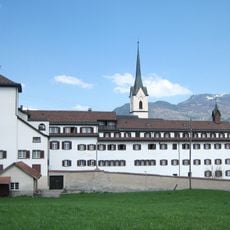
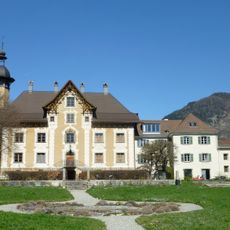
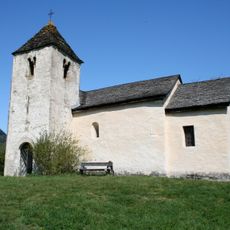
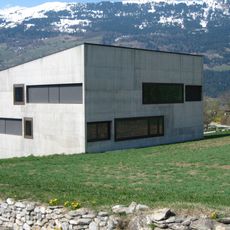
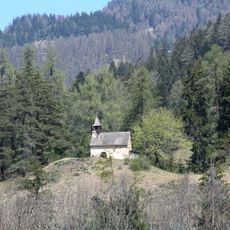
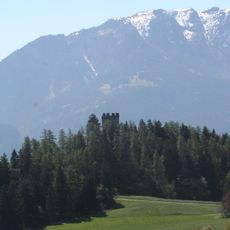
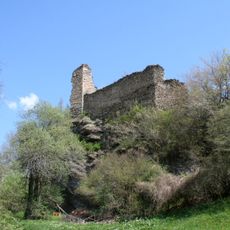
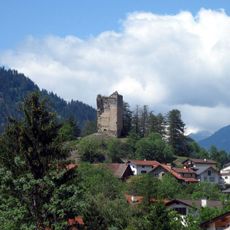
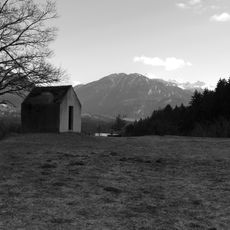
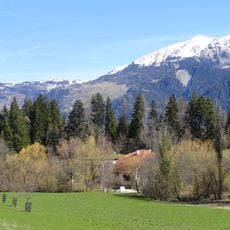
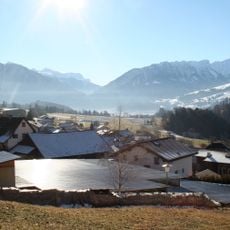
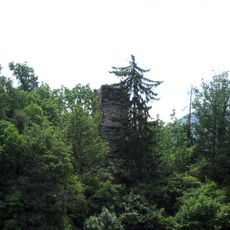
Rietberg Castle, Medieval fortress in Pratval, Switzerland
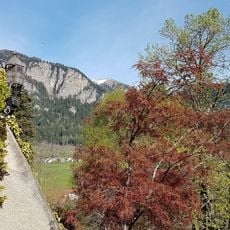
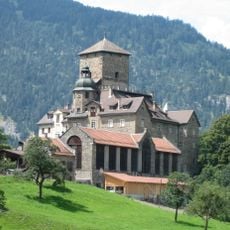
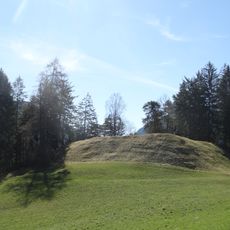
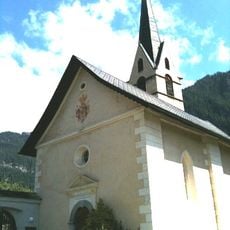
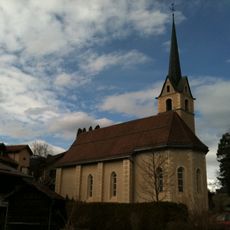
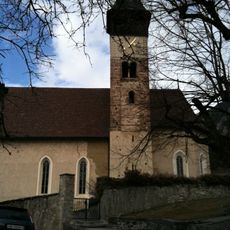
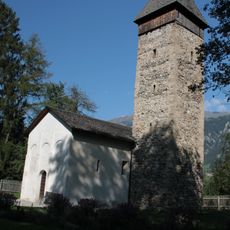
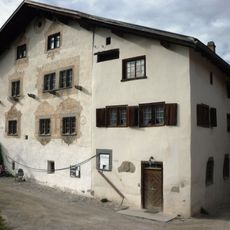
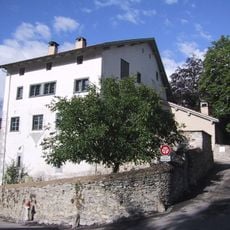
Rietberg Castle stands above Pratval in the Domleschg valley, Graubünden, at the edge of the Rietbach gorge. Its rectangular central tower, the oldest part, has walls up to 2.5 m thick enclosing the foundations of an earlier 12th-century tower. Two residential wings with medieval foundations flank the tower to the north; they were rebuilt in the 17th and 18th centuries, when the tower's ox-eye windows were added. A crenellated ring wall on the south side, dated 1792 at the gate, encloses the courtyard with its medieval cistern.
The Lords of Rietberg, vassals of Sax-Misox, are first documented in 1286; their 13th-century tower may stand on 12th-century foundations. After Johann von Rietberg died in 1349, the Bishop of Chur secured the castle by 1353 and settled rival claims in 1388. On 25 February 1621 Jörg Jenatsch's anti-Habsburg troops killed Pompeius Planta here during the Bündner Wirren.
The castle's name comes from the Lords of Rietberg, first documented on 29 July 1286 as vassals of the Sax-Misox family. In 1621 it was the scene of the murder of Pompejus Planta, leader of the Catholic faction, by Jörg Jenatsch; Conrad Ferdinand Meyer later used the event in his novella Jürg Jenatsch. The former knight's hall and wooden shed are now rented as holiday apartments.
Access is by marked walking paths from Pratval, though conditions vary with season and weather. Sturdy footwear is recommended, as the terrain is uneven and partly steep.
In the second-highest tower room, around 350 greater mouse-eared bats roost on heavy beams in summer, entering through the old doorway to the fighting platform; the colony varies between fifty and several hundred animals and leaves in late autumn for an unknown winter site.
The community of curious travelers
AroundUs brings together thousands of curated places, local tips, and hidden gems, enriched daily by 94,035 contributors worldwide.