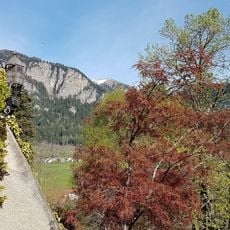
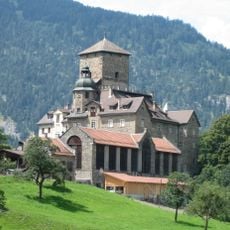
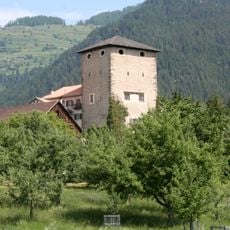
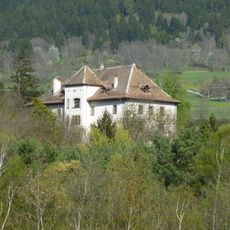
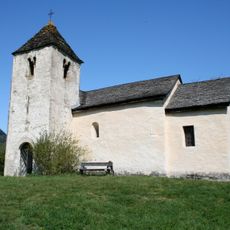
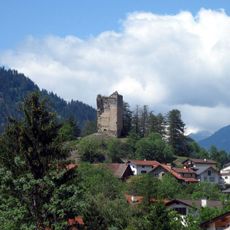
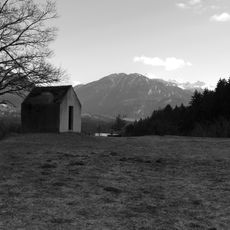
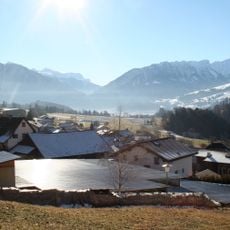
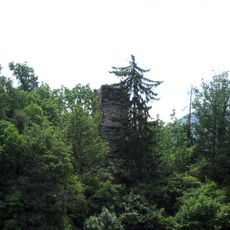
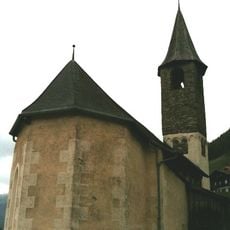
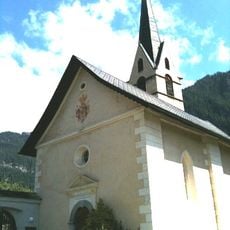
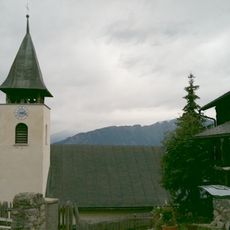
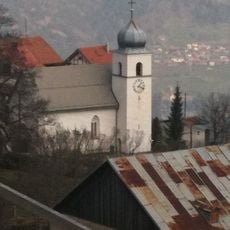
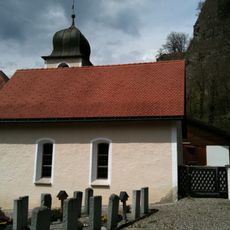
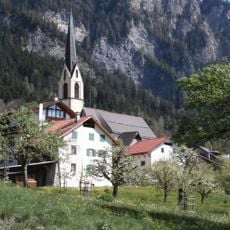
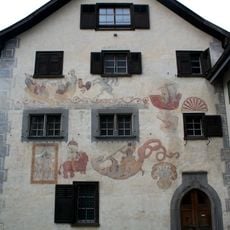
St. Maria Magdalena, Class A cultural property church in Paspels, Switzerland.
St. Maria Magdalena stands in the hamlet of Dusch within Domleschg municipality in Grisons and displays traditional Swiss religious architecture from its period. The building has a simple structure typical of rural churches with regional design characteristics.
The chapel is of Romanesque origin, but its construction date is unknown; it was first documented in the Churwalden Urbar of 1508. In the 13th century it belonged to the Barons of Vaz and was donated to the Premonstratensian monastery of Churwalden. After the Reformation it stood unused until 1786, when the monastery handed it to the Catholic parish of Paspels.
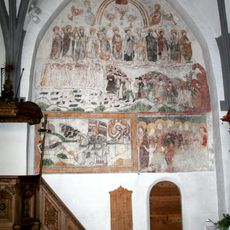
The chapel's name comes from Mary Magdalene, to whom the north-wall fresco cycle is dedicated; the apse wall carries a Marian cycle by the Waltensburg Master. The building was a branch of the parish church of St. Lorenz in Paspels, and after the Reformation it stood unused until the Churwalden monastery handed it to Paspels' Catholic parish in 1786.
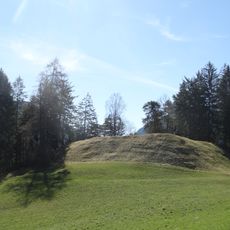
The chapel stands on a hilltop above the hamlet of Dusch, above Paspels in the Domleschg valley; the last stretch is a short walk uphill from the hamlet. The original Roman grave slab used as the altar plate is kept in the Rhaetian Museum in Chur, while a copy is shown in the chapel.
The altar slab is a reused Roman tombstone of white Vinschgau marble, dated by its wording and lettering to the 3rd century and inscribed to Claudius Senecianus, who lived forty years, by his wife Silvania Procella. The original is kept in the Rhaetian Museum in Chur; a copy lies in the chapel.
The community of curious travelers
AroundUs brings together thousands of curated places, local tips, and hidden gems, enriched daily by 94,551 contributors worldwide.