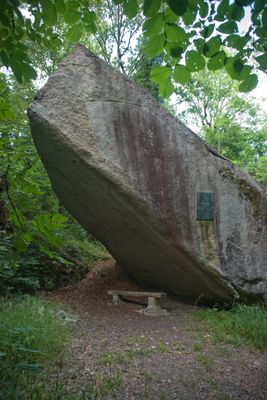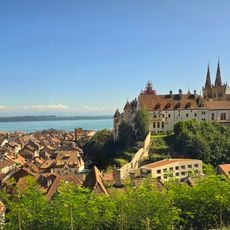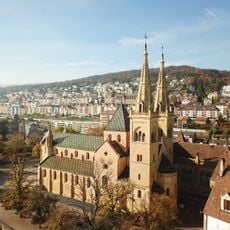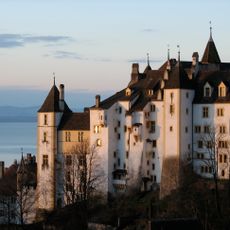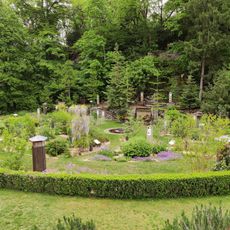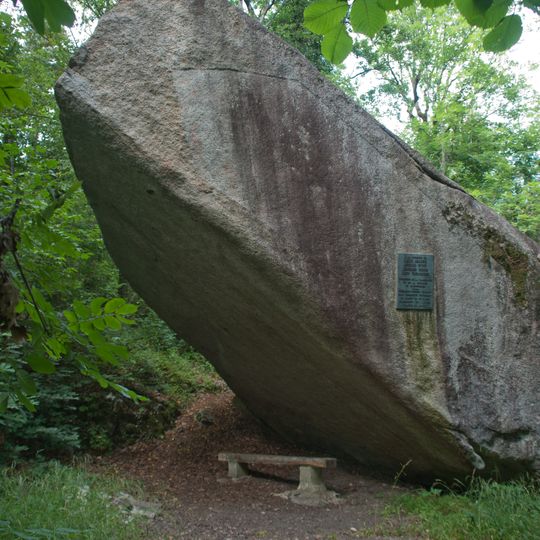
Pierrabot, Erratic block in Neuchâtel, Switzerland.
Pierrabot is a granite erratic block standing in a forest northwest of Neuchatel at 708 meters elevation. The stone spans approximately 1,350 cubic meters in volume and weighs around 3,000 tons.
The granite block was carried from the Mont Blanc massif by the Rhone glacier during the Würm glaciation and left here around 20,000 years ago. In 1838, at Louis Agassiz's request, it was classified as a "precious monument of natural history" after he used it to defend his glacial theory before the Swiss Natural Sciences Society.
The name comes from Franco-Provençal "pierra a bot", meaning toad stone, and the boulder is also called Pierre Crapaud. A plaque placed in 1966 names Louis Agassiz, Arnold Guyot, Édouard Desor and Léon Dupasquier as pioneers of glaciology and Quaternary geology. A second plaque from 1993 marks the centenary of the student society Amici Naturae, whose first meeting was held at Pierrabot.
The stone can be reached via hiking trails that run through the forest area. The location also interests schools and universities studying glacial formations in the Jura mountains.
The name comes from the Franco-Provençal Neuchâtel patois "Piérra a bot", meaning "stone of the toads", because the block's shape can evoke a toad; it is also called Pierre Crapaud. The German form names it "Krötenstein", a stone that looks like a toad ready to leap.
The community of curious travelers
AroundUs brings together thousands of curated places, local tips, and hidden gems, enriched daily by 93,908 contributors worldwide.