Villa Ciani, Villa and national cultural property in Ciani Parc, Lugano, Switzerland
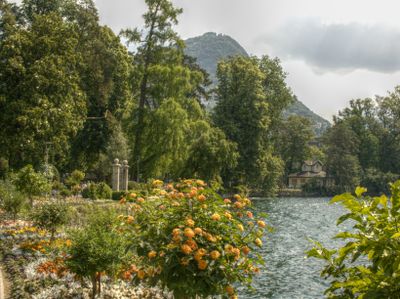
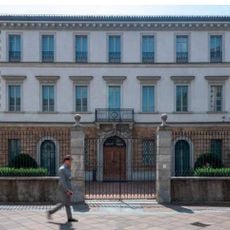
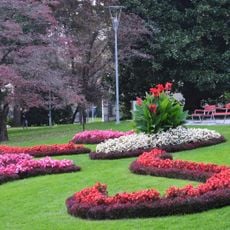
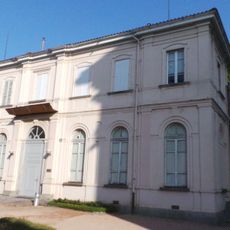
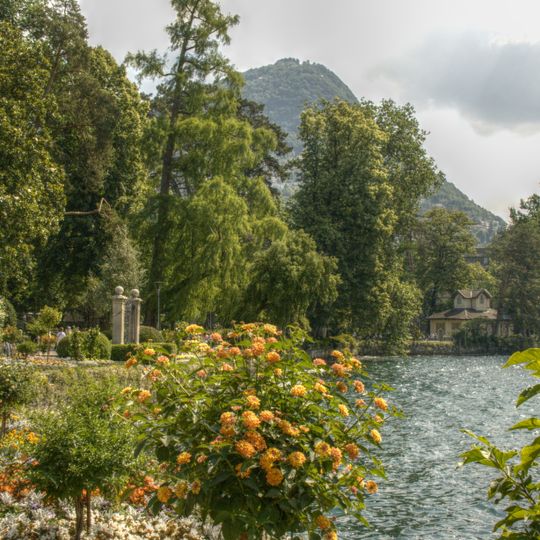
Villa Ciani is a neoclassical residence built between 1840 and 1843 for the brothers Giacomo and Filippo Ciani, in the eastern part of Lugano's centre. It stands inside the 63,000 m² Parco Ciani, a nineteenth-century landscape garden with winding paths, plane trees, cedars, magnolias, camellias and palms, running along the lake from the Rivetta Tell to the mouth of the Cassarate.
Villa Ciani was built between 1840 and 1843 in neoclassical style for the brothers Giacomo and Filippo Ciani, a family from Blenio settled in Milan. In 1868 it passed to the Milanese physician Antonio Gabrini, then to the Dell'Acqua family, and in 1912 the City of Lugano bought the complex, turning the villa into a museum and the grounds into a public park. On the site stood a castle built in 1286 by the Rusca of Como, rebuilt in 1498 by Ludovico il Moro and destroyed by the Swiss in 1517.
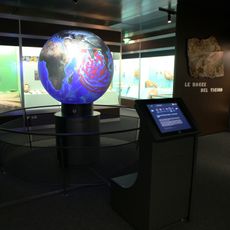
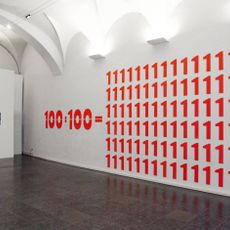
Villa Ciani now houses temporary exhibitions and cultural events, while the park around it holds the cantonal library and the cantonal natural history museum. Since 2018 the park has included the Giardino dei Giusti, the first in Switzerland, where olive trees and plaques commemorate six Ticino residents who saved people persecuted for political, racial or religious reasons during the 20th century.
You can reach the estate on foot through the adjacent park, which has well-marked paths and rest areas. The best time to visit is during warmer months when the gardens are fully developed and comfortable for walking.
In 2018 the park became home to Switzerland's first Garden of the Righteous, where olive trees and plaques honour six Ticino residents who saved people persecuted for political, racial or religious reasons during the 20th century. It lies near the mouth of the Cassarate, by a small beach with benches facing the Gulf of Lugano.
The community of curious travelers
AroundUs brings together thousands of curated places, local tips, and hidden gems, enriched daily by 93,849 contributors worldwide.