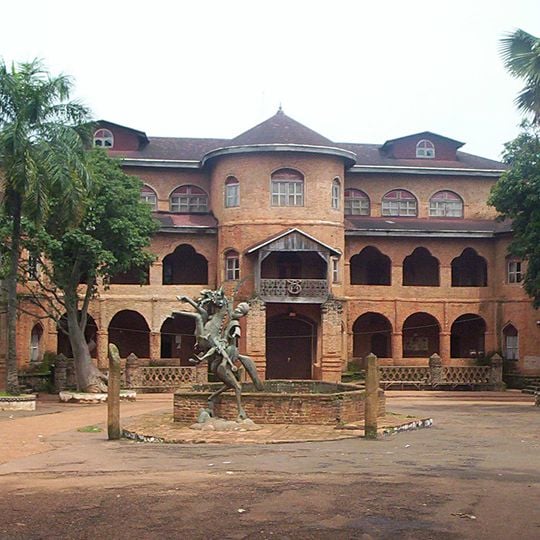
Bamun sultan palace, Official residence and monument in Foumban, Cameroon
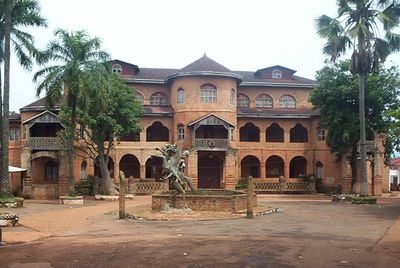
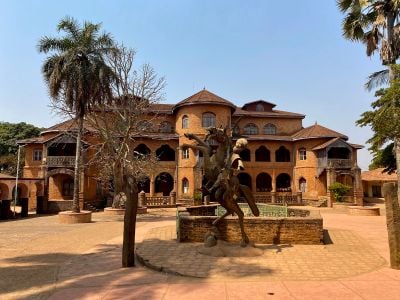
The Bamun Sultan Palace is a two-storey reddish-brown brick building in Foumban, Cameroon, with a dark tiled roof and a central round tower with a conical roof above the entrance. The entrance has an arched portico with a wooden balcony and a metal emblem above a dark doorway, and rows of arched openings run along both floors. A bronze equestrian statue on a brick base stands in the courtyard in front.
The palace was built in 1917 in a Bavarian German style and remains the residence of the king of the Bamum. Its museum traces the dynasty of the Bamum kings from 1394 to the present day. It gives particular attention to Ibrahim Njoya, who died in 1933 and created the Bamum script, called shü-mom, at the end of the 19th century.
The palace museum displays royal garments, ceremonial objects, and handwritten documents tied directly to the Bamun royal family. Walking through the rooms, visitors encounter symbols and items that still hold a living meaning for the local community today.
Visiting during the dry season is a good idea, as the paths around the grounds are easier to walk. The exhibition halls are all indoors, so plan enough time to move through the rooms without rushing.
The palace holds a collection of around 12,500 objects, among them manuscripts written in the script invented by King Njoya, known as Shumom. This writing system was created specifically for the Bamun people and is one of the few scripts developed independently on the African continent.
The community of curious travelers
AroundUs brings together thousands of curated places, local tips, and hidden gems, enriched daily by 92,772 contributors worldwide.