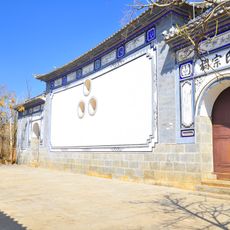
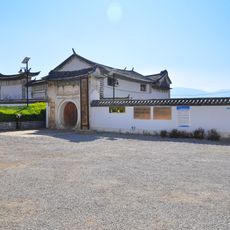
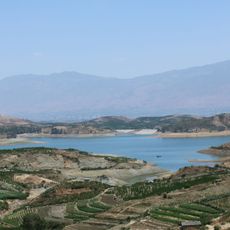
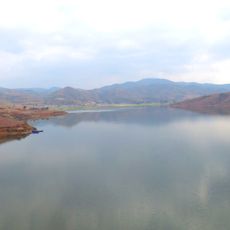
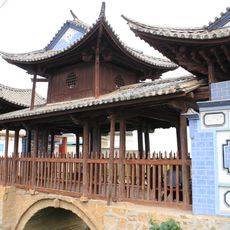
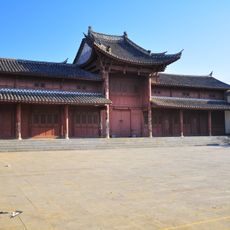
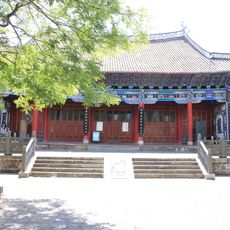
Baiyangcun archaeological site, Archaeological site in Binchuan County, China
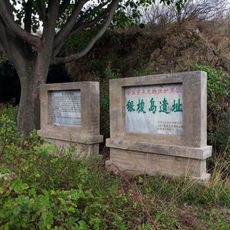
Baiyangcun archaeological site lies on the east bank of the Sangyuan River west of Baiyang village, north of Jinniu town in Binchuan County, Yunnan. Excavated in 1973–74 over 290 square metres, its 4.35-metre cultural layer held house foundations, hearths, storage pits and tombs, with pottery, stone, bone and tooth tools and carbonised grain.
Farmers of the Baiyangcun production team found the site in spring 1972 while taking soil to level fields. From November 1973 to January 1974 the Yunnan Provincial Cultural Relics Work Team excavated 290 square metres, revealing a 4.35 m cultural layer with houses, hearths, pits and tombs. Radiocarbon dating gave 2050±105 BC, calibrated to 2165±105 BC. It was named a provincial protected unit in 1998 and a national one in 2006.
The site gives its name to the Baiyangcun culture, dated by the German Wikipedia to 5000–3700 BC. Excavated finds include pottery, stone, bone and tooth tools, plus carbonised grain and food powder, showing a farming community that also hunted, gathered and kept livestock.
The site is an active research area and visitors need permission from local authorities to access it. It is best to check locally about current access conditions and opening hours for different areas before planning your visit.
The site gave its name to the Baiyangcun culture, dated by one source to 5000–3700 BC, while radiocarbon dates from the excavated material place occupation around 2050±105 BC (2165±105 BC tree-ring calibrated). The 1973–74 excavation covered 290 m² through a 4.35 m cultural layer, yielding house floors, hearths, storage pits and burials.
The community of curious travelers
AroundUs brings together thousands of curated places, local tips, and hidden gems, enriched daily by 94,228 contributors worldwide.