Former Residence of Wang Xiaoda, Cultural heritage site in Xiangcheng, China
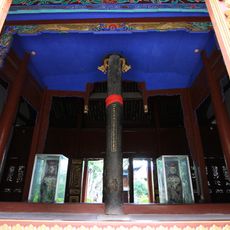
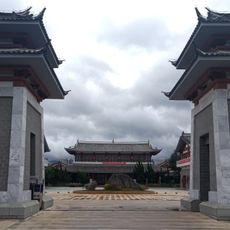
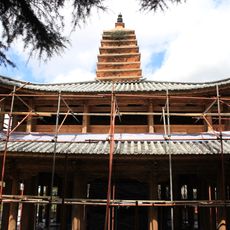
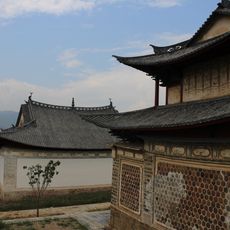
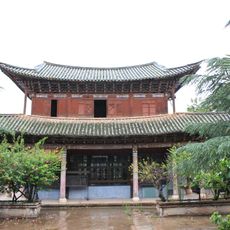
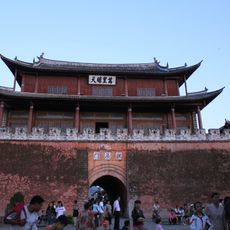
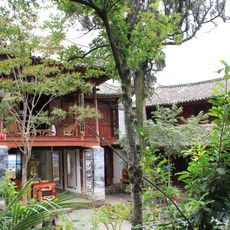
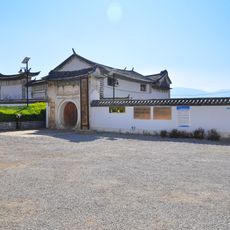
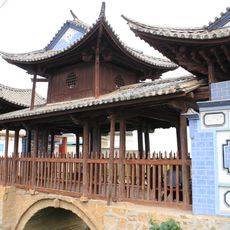
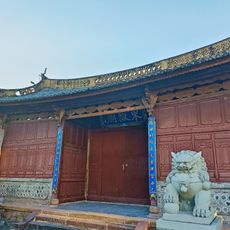
The Former Residence of Wang Xiaoda stands at 41 Beihou Street in Xiangcheng, Xiangyun County, facing east on a plot of about 1,550 square metres. It is a one-entrance, two-courtyard "zouma zhuanjiao lou" layout: a front courtyard of single-eave buildings and a rear courtyard of two-storey buildings with inner double eaves and outer single eaves, all timber-framed with small grey tiles. The complex comprises the main gate, side gate, passage hall with its north and south wings and side rooms, and the main hall with its own wings and side rooms.
Built in 1901, the 27th year of the Guangxu reign, the house was the childhood home of Wang Xiaoda, an early member of the Chinese Communist Party. From 1956 to 1980 it served as a county guesthouse and a maternal and child health centre. It was listed as a county cultural relic in 2011, a prefectural one in 2013, and a provincial one on 21 February 2019.
The residence holds two permanent exhibitions: "Brothers, Uncles and Nephews All Revolutionaries: A Red Family in Ink and Brush" and "Cultural Relics from the Red Army's Long March through Xiangyun". The first traces Wang Xiaoda's revolutionary family; the second displays objects tied to the Red Army's passage through the county. Part of the building still serves as the office of the Xiangyun County Cultural Relics Management Institute.
The residence stands at No. 41 Beihou Street in Xiangcheng town, facing east, with a main gate and a side gate; the two courtyards are linked by a covered walkway on the upper floor. Part of the building still houses the office of the Xiangyun County Cultural Relics Management Institute, so some rooms may be closed to visitors. The Xiangyun County History and Culture Museum was inaugurated here on 22 January 2021.
Since 22 January 2021 the residence has also housed the Xiangyun County History and Culture Museum, and two themed exhibitions are on display: one on the revolutionary family of Wang Xiaoda and his relatives, and one on Red Army relics from the Long March through Xiangyun. Part of the building still serves as offices for the county's cultural relics office.
The community of curious travelers
AroundUs brings together thousands of curated places, local tips, and hidden gems, enriched daily by 94,259 contributors worldwide.