Yongle Temple, Taoist temple complex in Ruicheng County, Shanxi, China
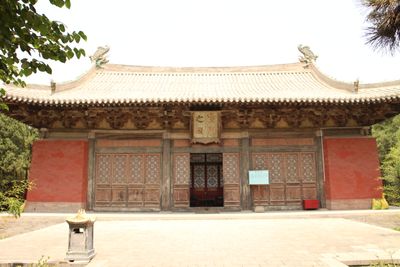
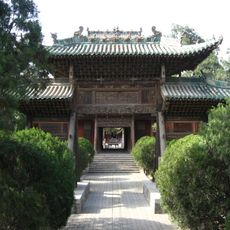
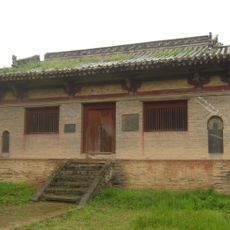
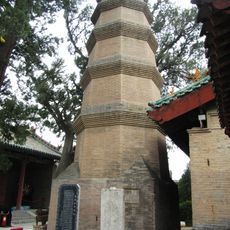
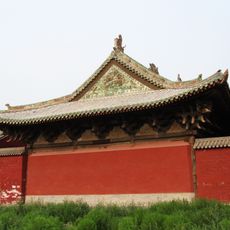
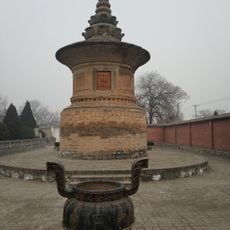
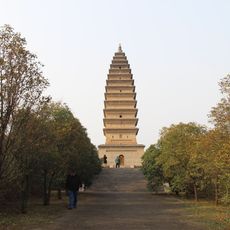
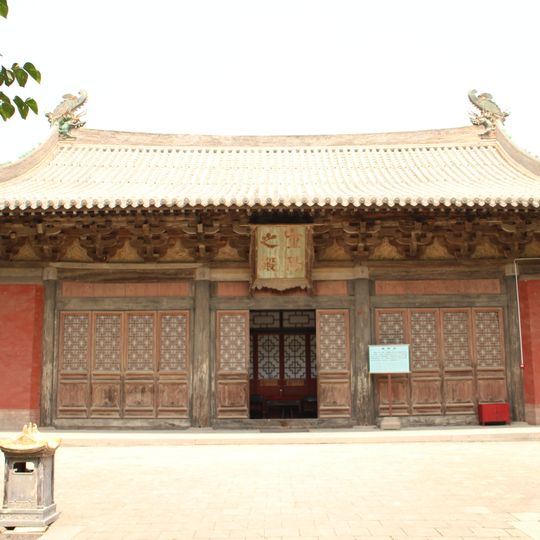
The Yongle Temple is an ancient Taoist temple in Ruicheng County featuring traditional Chinese architecture from the Yuan Dynasty period. The site contains multiple halls arranged along a north-south axis, each displaying painted decorations on their inner walls.
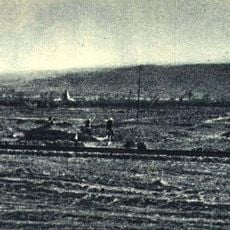
The temple started construction in the middle of the 13th century and took over a century to complete as work continued across generations. The entire site was later moved to its present location to make way for a major engineering project.
The temple's name honours Lü Dongbin, the Tang-era scholar said to have been born in Yongle Town, and the重阳殿 (Chongyang Hall) is named for Wang Chongyang, founder of the Quanzhen school. The 三清殿 (Sanqing Hall) holds the 1325 Chaoyuan Tu, 403.34 square metres showing 290 deities over 4.26 metres tall, painted by the Zhu Haogu workshop. The 纯阳殿 murals, finished in 1358 by Zhu's pupils, tell Lü's life in 52 scenes.
The temple sits in a rural area and it is wise to arrive early in the day when the halls are less crowded. The pathways between the different sections are in good condition and easy to walk through.
A significant collection of Yuan Dynasty murals was preserved at this location, showing hundreds of religious figures in elaborate scenes that unfold across the walls. These artworks survive today as rare examples of painted works from that distant era.
The community of curious travelers
AroundUs brings together thousands of curated places, local tips, and hidden gems, enriched daily by 93,875 contributors worldwide.