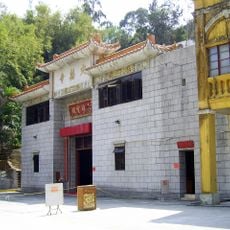
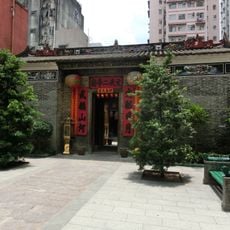
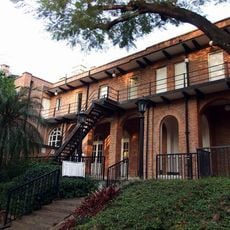
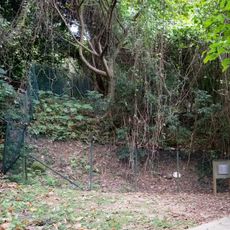
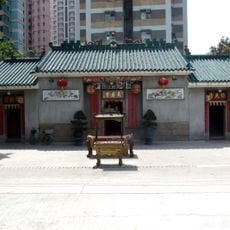
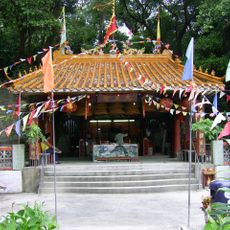
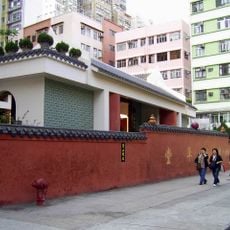
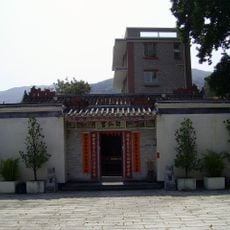
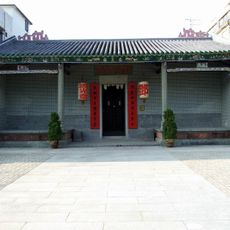
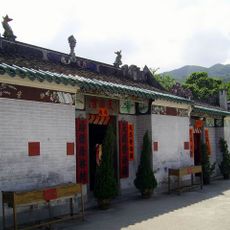
Pun Chun Yuen, Chinese temple in Kam Shan, Hong Kong.
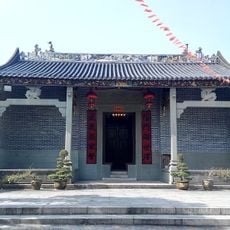
Pun Chun Yuen is a Chinese temple with curved roofs and carved wooden pillars that display the architectural style of traditional structures from its era. The building features a central altar hall with side chambers and painted decorative elements across its facade.
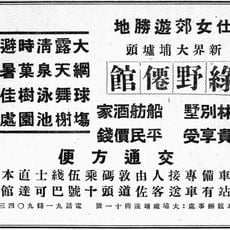
Built in the early 1930s by lay Buddhist Huang Xiaowei, who made his fortune from the Yongliwei distillery, Pun Chun Yuen began as a retreat on Jin Shan. In 1953 he moved the Duoduo Buddhist Society here and added halls and gardens. His widow transferred it to the Heung Hoi Lin Society in 1967, when it was renamed and expanded.
The name Ban Chun Yuen means "three people, half a day": Huang Xiao Wei and two friends regularly spent half-day visits there discussing Buddhism and chanting. In 1953 the Dodo Buddhist Society moved to the site, and since 1967 the Heung Hoi Lin Society has managed it, adding halls such as Ksitigarbha Hall and Guanyin Hall.
The temple is located on Shek Lin Road and can be viewed primarily from the outside and surrounding grounds. Early morning visits offer better lighting for seeing the architectural details and fewer people around.
The name "Pun Chun" means "half spring": it encodes "three people, half a day", recalling Huang Xiaowei's regular half-day visits with two friends for Buddhist study and chanting. The temple's full name is Xiang Hai Lian She Pun Chun Yuen, after the Xiang Hai Lian Society took over in 1967.
The community of curious travelers
AroundUs brings together thousands of curated places, local tips, and hidden gems, enriched daily by 94,087 contributors worldwide.