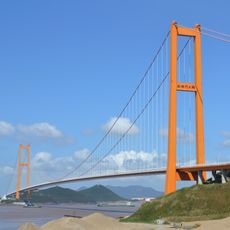
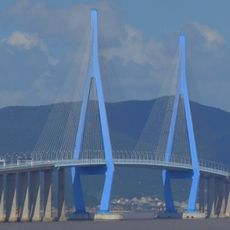
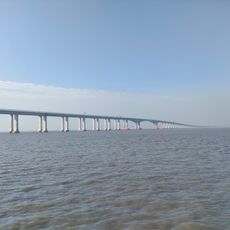
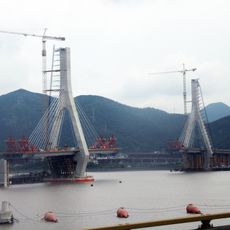
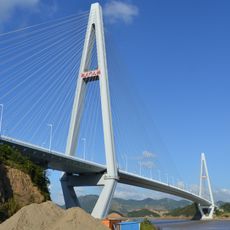
Jiangnan Bridge, Double-deck bridge in Hangzhou, China.
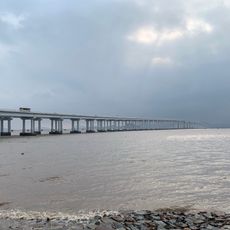
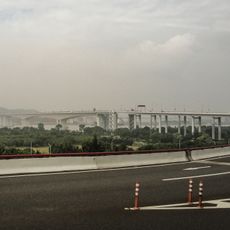
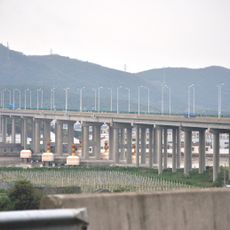
Jiangnan Bridge is a double-deck crossing over the Qiantang River in Hangzhou, stretching over 1000 meters in length. The structure allows vehicles and trains to travel simultaneously on separate levels, supported by multiple large spans.
Engineer Mao Yisheng designed the structure, which was built between 1934 and 1937 during a period of rapid infrastructure advancement in China. Its construction marked an important moment when modern bridge engineering became possible in the country.
The bridge links communities on both riverbanks and has become a landmark that local residents pass through daily, marking the connection between different parts of the city. It represents how infrastructure shaped modern urban life in Hangzhou.
The bridge is designed for heavy daily traffic including cars, buses, and trains, connecting major transportation routes across the city. Pedestrians should know that foot access may be limited, and it is best to use designated crossing points.
During the Shanghai conflict in 1937, military authorities considered destroying the bridge to halt the advance of opposing forces. This dramatic moment reveals how crucial the structure had become to the region's strategic control.
The community of curious travelers
AroundUs brings together thousands of curated places, local tips, and hidden gems, enriched daily by 91,850 contributors worldwide.