Former residence of Yu Qiaqing in Longshan, Protected national heritage site in Longshan, China
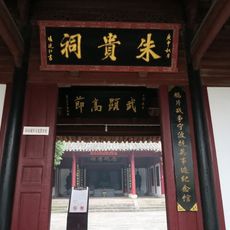
The former residence of Yu Qiaqing in Longshan, also called Tianxu Hall, consists of two separate groups of buildings: three traditional Chinese courtyards built in 1916–1919 and two Western-style blocks built in 1926–1929, divided by a 3.6-metre alley. The first group has a brick gatehouse inscribed "Tianlun Lexu" and a main hall with a plaque reading "Tianxu Tang"; the second group has a 6-metre granite wall with three stone gates and a main building with mosaic floors and fireplaces.
The estate was built in 1916 as a private residence for the wealthy merchant Yu Qiaqing and reflected the power of the local business elite. After serving multiple purposes throughout the 20th century, it became a protected monument of national importance.
The residence shows how prosperous merchants lived in the early 1900s, with traditional wooden carvings and open courtyards that shaped family life. This layout reveals how well-off families of that period organized their daily routines across different pavilions and gardens.
The grounds are walkable with several staircases and narrow passages between buildings, so comfortable shoes are a good idea. Visitors should allow enough time to explore all the courtyards and wings at their own pace.
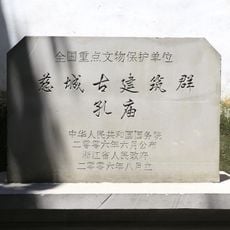
During the Cultural Revolution, villagers covered the residence's brick carvings with lime to protect them. The site became a Cixi city protected unit in 1997, a national key cultural relic in 2001, and opened as a museum in 2007 after the city funded restoration in 2004.
The community of curious travelers
AroundUs brings together thousands of curated places, local tips, and hidden gems, enriched daily by 95,055 contributors worldwide.