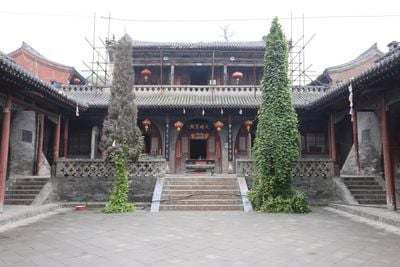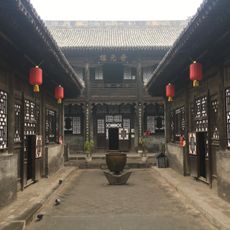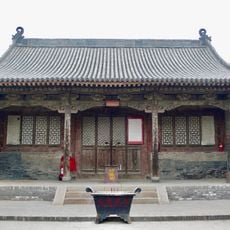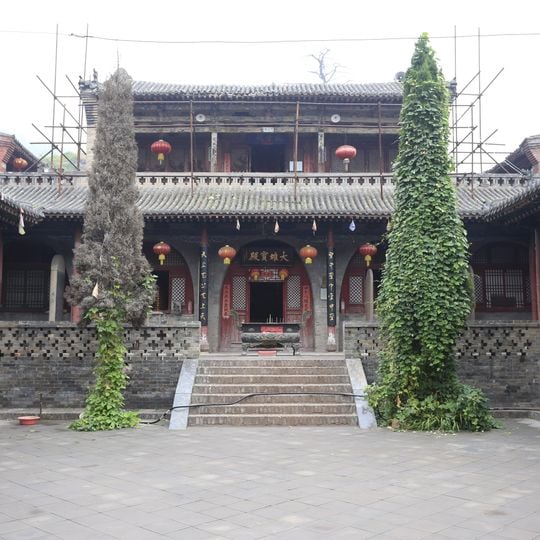
Baiyun Temple, Liangjiatan, Buddhist temple in Pingyao, China.
Baiyun Temple stands on Baofeng Mountain by Liangjiantan village in Buyi township, Pingyao county, built against the cliff and covering 7,793 square metres. Its surviving buildings include the mountain gate, Hall of the Heavenly Kings, Weituo Hall, Dizang Hall, Mahavira Hall, Guanyin Hall and Ancient Buddha Hall, with a pagoda forest of six burial stupas east of the temple.
Founded in the Tang dynasty (618–907) under the name Xiyu Temple, Baiyun Temple was largely rebuilt in the 16th year of the Ming Jiajing reign (1537). Shanxi province listed it as a protected cultural relic on 10 June 2004, and in March 2013 the State Council added it to the seventh batch of Major Historical and Cultural Sites Protected at the National Level.
The temple was originally called Xiyu Temple and only later received the name Baiyun (White Cloud). In front of the gate stand two Tang-dynasty pagoda trees and nine old cypresses, known as the Dragon-Phoenix Pagoda Trees and the Nine Phoenixes Facing the Sun. East of the temple, the pagoda forest holds six burial stupas of monks from different dynasties.
Baiyun Temple stands on Baofeng Mountain west of Liangjiantan village in Buyi township, Pingyao county, not in Pingyao's old town. The halls climb the slope and stand against the cliff, so the visit involves steps and uneven ground; allow time for the climb and wear sturdy shoes.
The temple is built against a cliff on Baofeng Mountain, and its name means "White Cloud Temple"; it was formerly called Xiyu Temple. In front of the gate stand two Tang-dynasty pagoda trees and nine old cypresses, known as the Dragon-and-Phoenix Pagoda Trees and the Nine Phoenixes Facing the Sun.
The community of curious travelers
AroundUs brings together thousands of curated places, local tips, and hidden gems, enriched daily by 93,958 contributors worldwide.