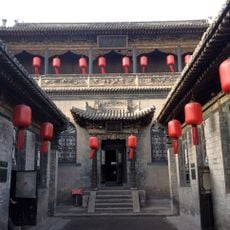
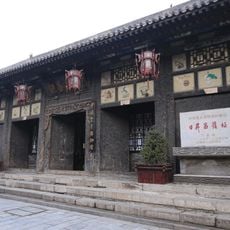
Shuanglin Temple, Buddhist temple in Qiaotou village near Pingyao, China.
Shuanglin Temple is a Buddhist sanctuary in a village setting southwest of Pingyao, with ten halls arranged across three courtyards. Each courtyard contains skillfully painted clay figures mounted on wooden frames, representing over a thousand years of sculptural craftsmanship.
Its founding in the 6th century under the Northern Qi Dynasty established this place as an early Buddhist center in the region. Later work during Ming and Qing periods transformed its appearance and reinforced its role as a religious site.
The temple displays representations of Buddha, Bodhisattvas, and celestial guardians created by local artisans across centuries. These figures reflect religious beliefs that remain visible to visitors today.
The temple lies in Qiaotou village, 6–7 km southwest of Pingyao; local transport or a taxi from the old city takes about 15 minutes. The compound is entered through a gate in a high earthen wall, and the ten halls are spread over three courtyards, so plan at least two hours. Many sculptures stand behind caged chambers, and some are in poor condition.
The eyes of the clay figures are made of glazed glass, so each face seems to follow a visitor from any angle, and in dim light the pupils appear to move. The clay itself is a sticky local red earth that dries hard as stone. A statue of a husband and wife who cared for the shrine during the Chinese Civil War stands among the deities.
The community of curious travelers
AroundUs brings together thousands of curated places, local tips, and hidden gems, enriched daily by 93,079 contributors worldwide.