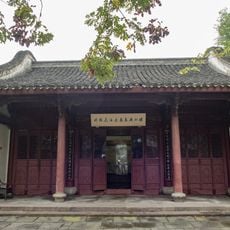
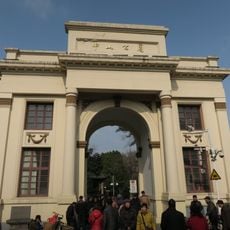
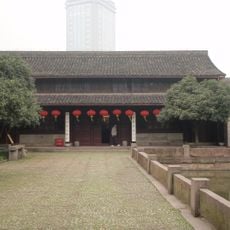
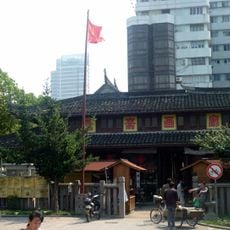
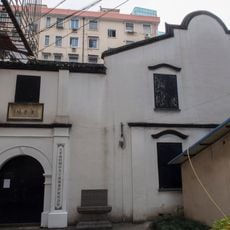
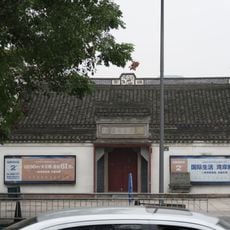
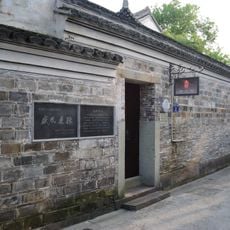
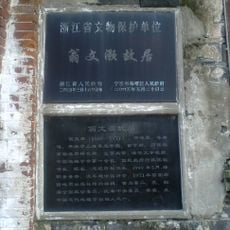
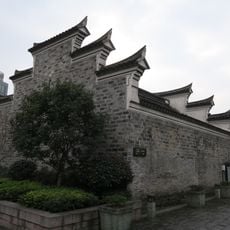
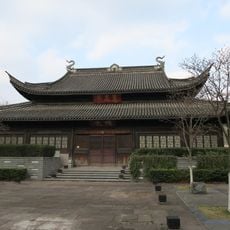
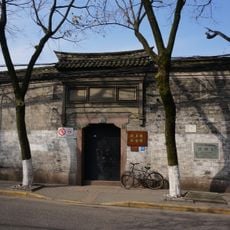
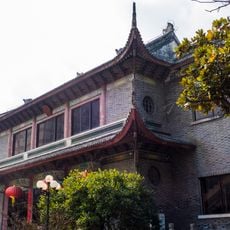
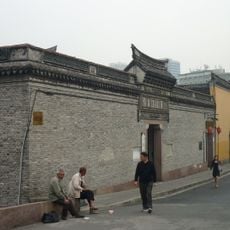
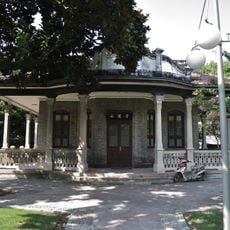
Qin's Ancestral Temple, Ancestral temple in Haishu District, China.
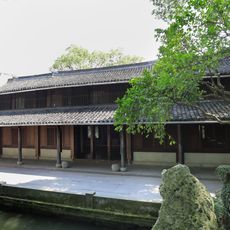
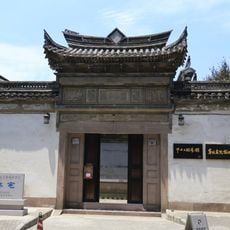
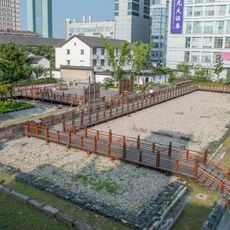
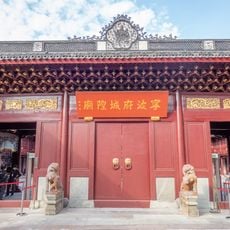
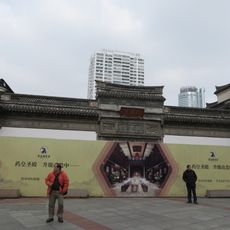
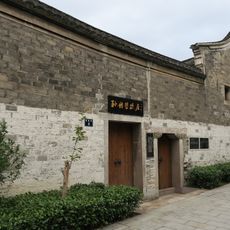
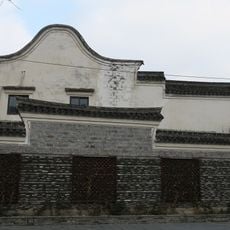
Qin's Ancestral Temple is a Republican-era ancestral hall complex at 74 Mayou Street, south of Tianyi Pavilion in Ningbo's Haishu District. Facing south, it covers nearly 2,000 square metres and comprises a screen wall, stone fence, front hall, stage, middle hall and rear hall, with side wings; the stage has a 'chicken-coop' coffered ceiling of 16 curves meeting at a central mirror.
The Huxi Qin lineage moved from Cixi in the Ming dynasty and built an earlier ancestral hall on Zhangqi Lane. In 1923 the Shanghai dye merchant Qin Jihan, whose father Qin Jun'an funded over 200,000 silver dollars, replaced it with this branch hall, completed in 1925 by Hu Rongji Construction. It served as barracks in 1941 and during the civil war, became a knitting factory in 1951, a medicine company warehouse in 1958, and joined the Tianyi Pavilion Museum in 1994.
The temple is no longer used for ancestral rites: since 1994 it has been part of the Tianyi Pavilion Museum, which manages it. Its stage, with a ceiling of 16 curved beams meeting at a central mirror, is known as a "chicken-coop dome". The stage's rear screens show scenes such as the Eight Immortals Crossing the Sea.
The complex stands at 74 Mayou Street, north of Mayancao and south of Tianyi Pavilion's East Garden, in Ningbo's Haishu District. It is managed by the Tianyi Pavilion Museum, and entry is included with that museum's ticket. The three halls rise in steps from south to north, so allow time to walk the full axis.
The stage's coffered ceiling, a "chicken coop top", is formed by 16 curved beams meeting at a single point where a mirror is set. Above the stage, a 15 cm cast-iron column replaces wood to keep sightlines clear. The stage's plaques read "虚华实境" and "高悠明久".
The community of curious travelers
AroundUs brings together thousands of curated places, local tips, and hidden gems, enriched daily by 94,049 contributors worldwide.