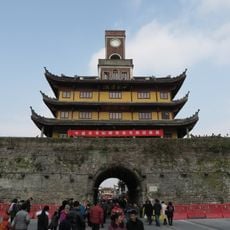
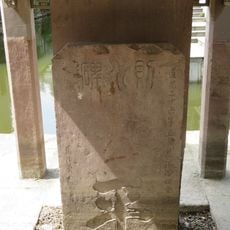
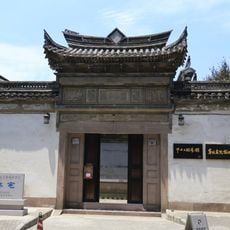
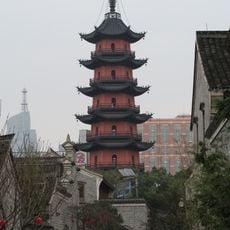
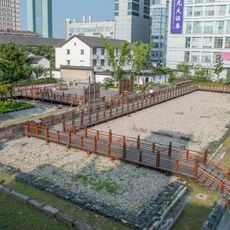
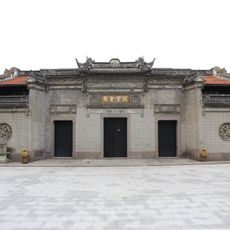
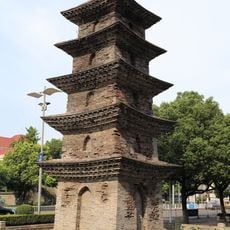
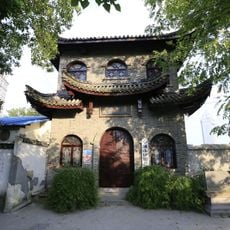
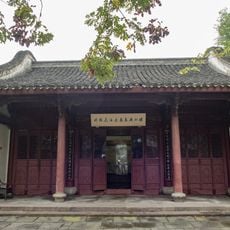
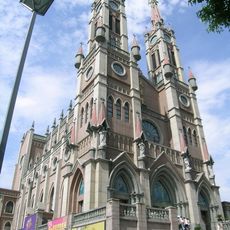
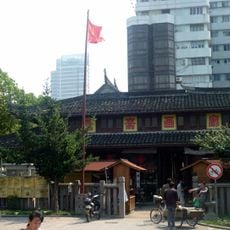
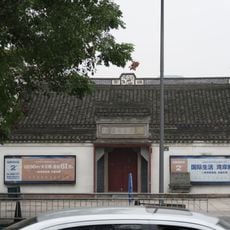
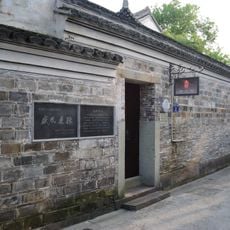
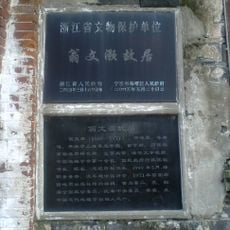
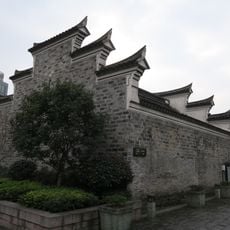
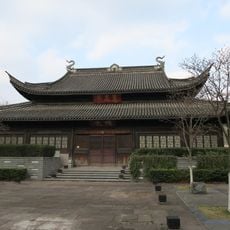
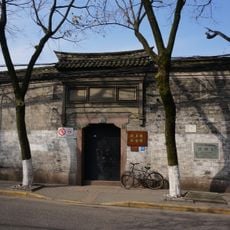
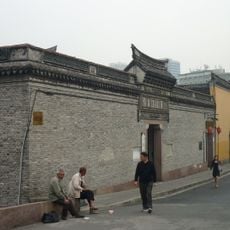
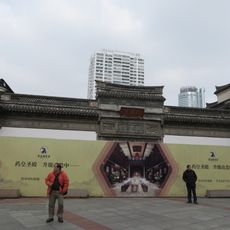
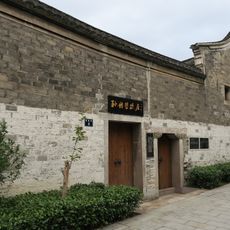
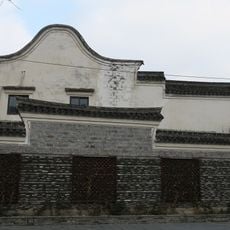
Ningbo City God Temple, Taoist temple in Haishu District, China.
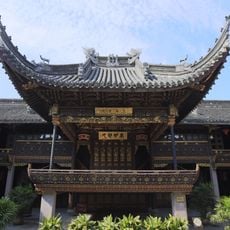
Ningbo City God Temple is a Taoist shrine featuring multiple halls, courtyards, and intricately carved wooden structures arranged in a symmetrical layout according to classical Chinese principles. The buildings display typical architectural features such as curved tile roofs and decorated beams.
The temple was first built in 916, when Mingzhou governor Shen Chengye founded a City God temple southwest of the sub-city. It burned in 1371 and was rebuilt by prefect Zhang Qi on the site of a former imperial preceptor hall; in 1381 it took the name Ningbo City God Temple. In 1645 Qian Sule gathered rebels here against the Qing. After fires in 1693 and 1710, a 1727 overhaul under prefect Sun Zhao fixed its present scale and layout.
The temple is dedicated to Ji Xin, worshipped as the city god of Mingzhou since at least the Song dynasty. In 1920 public sacrifices to the city god ceased, and the site became Ningbo's largest public venue for opera and storytelling; troupes performing Jing, Kun and Yong opera appeared on its stage, and in the 1980s a games arcade was installed.
The shrine sits in a lane with vendors selling incense, traditional snacks, and local goods, making it very accessible to visitors. You should wear respectful clothing and keep quiet, as religious activities happen regularly throughout the day.
The stage's spiral "chicken-coop" ceiling holds 28 flying phoenixes and 480 gilded ruyi-cloud brackets, converging on a 50 cm bronze mirror; its shape is said to carry sound. The screen wall is about 18 m wide and over 7 m tall, with 21 large seal-script characters cut in relief, "Shen" at the centre.
The community of curious travelers
AroundUs brings together thousands of curated places, local tips, and hidden gems, enriched daily by 93,084 contributors worldwide.