Former residence of Yuan Xuelan, Historical residence in Suzhou, China
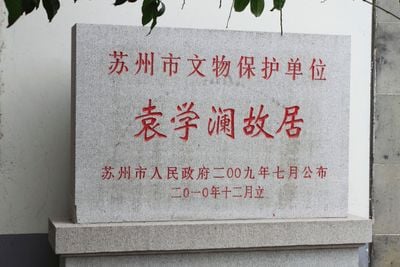
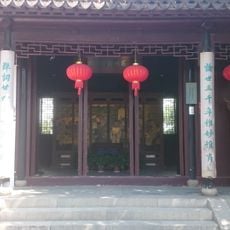
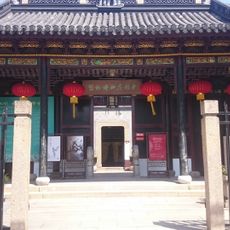
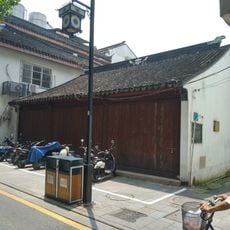
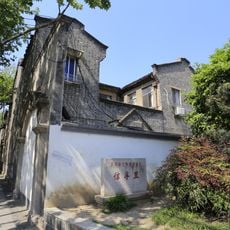
The former residence of Yuan Xuelan stands at 15, 17 and 17-1 Guantaiwei Road in the Gusu district of Suzhou. Its grey stone and brick facade is laid in a diamond pattern beneath a dark tiled roof with small decorative tiles along the ridged eaves. A white stone marker and a blue plaque reading 12-1 and 10-1 flank the dark red doorway, where two red lanterns hang and carved stone drums stand beside the entrance steps.
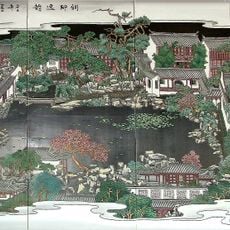
The house was originally the Lu family residence and was bought by Yuan Xuelan (1804–1879) in 1852. Because it stood beside the Twin Pagodas of the Luohan Yuan, he called it Shuangta Yingyuan, the "Twin Pagoda Shadow Garden". Yuan, a Yuanhe county native, wrote the twelve-volume Wujun Suihua Jili on Suzhou's seasonal customs. It was listed as a Suzhou municipal cultural relic in 2009.
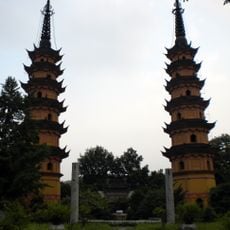
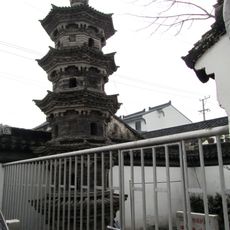
Yuan Xuelan bought the house in 1852 from the Lu family and named it Shuangta Yingyuan, "Twin Pagoda Shadow Garden", because it stood beside the twin pagodas of the Luohan Yuan. The name ties the residence to the pair of brick-and-wood pagodas a short walk away, and the stone marker at the door uses his name, not the garden name.
The residence stands at 15, 17 and 17-1 Guantaiwei Road in the Gusu district, beside the Twin Pagodas of the Luohan Temple, which gave it the name Shuangta Yingyuan, "Twin Pagoda Shadow Garden". Look for the white stone marker and the blue house-number plaques at the entrance, where two carved stone drums flank the steps.
The name Shuangta Yingyuan, "Shadow Garden of the Twin Pagodas", comes from the Luohan Yuan twin pagodas next door, whose silhouette the garden was built to borrow. Yuan Xuelan bought the former Lu family house in 1852 and gave it this name.
The community of curious travelers
AroundUs brings together thousands of curated places, local tips, and hidden gems, enriched daily by 94,017 contributors worldwide.