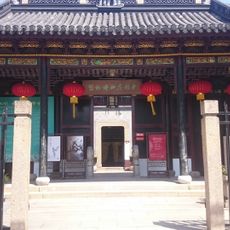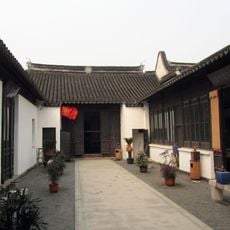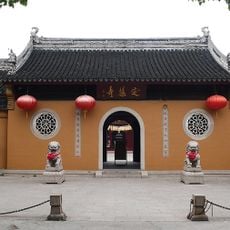
Twin pagodas of Suzhou, Buddhist pagodas in Suzhou, China
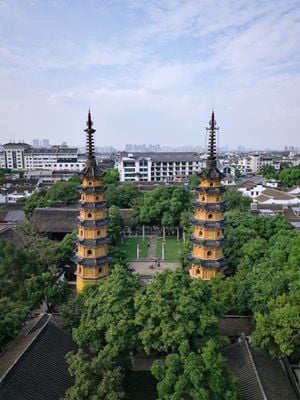
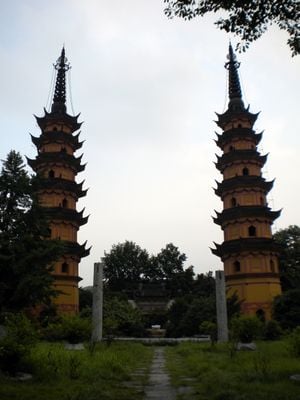
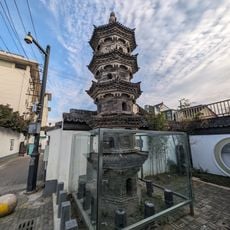
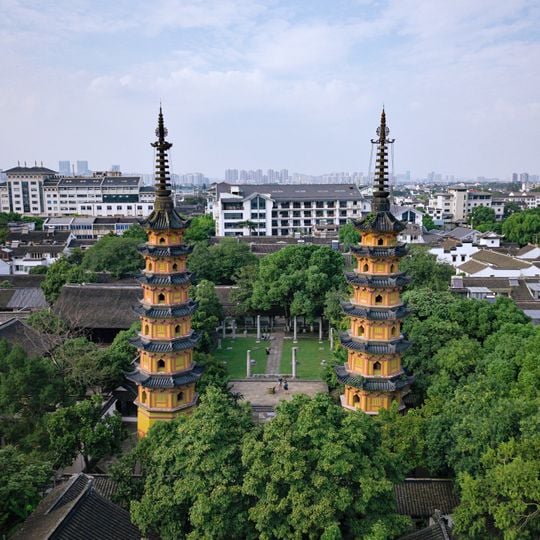
The Twin Pagodas of Suzhou are the main remnant of the Dinghui Buddhist temple in Suzhou, Jiangsu. Both brick pagodas are octagonal, seven stories tall, and measure 33.3 metres to the top of their iron steeples, which at 8 metres make up nearly a quarter of the total height. The square rooms of each storey are staggered 45 degrees from the one below, except for the octagonal second-floor room.
The pagodas were built in 982 during the Northern Song by Wang Wenhan and his brothers. The temple, first called Banruo in the Tang, became Luohan under the Wuyue, West Temple in the late 10th century and Dinghui at the end of the 11th. It burned at the end of the Yuan, was rebuilt by four monks, and was destroyed again in 1860 during the Second Opium War; only the pagodas and the main hall foundations remain.
The two pagodas are named Reliquary (Śarīra) Pagoda and Beneficial Virtue Reliquary Pagoda, once called Sarira Stupa and Sarira Stupa of Merits and Benevolence. A local intellectual joke likens them to writing brushes, with the nearby black tower dedicated to the God of Literature standing in for an inkstone.
The site is at 22 Dinghui Temple Lane in the Gusu district. The hall foundations lie 21 metres north of the pagodas, where 16 stone columns about 4 metres tall, 30 inverted-bowl column bases, stone lions and a carved stone Sumeru platform stand. The pagodas' interiors are not open for climbing.
The two pagodas are identical in structure and size, each 33.3 metres tall with seven storeys; the iron steeple alone reaches about 8 metres, nearly a quarter of the total height, and is the earliest known large iron steeple on a Chinese pagoda. The name Dinghui dates from the end of the 11th century.
The community of curious travelers
AroundUs brings together thousands of curated places, local tips, and hidden gems, enriched daily by 94,293 contributors worldwide.