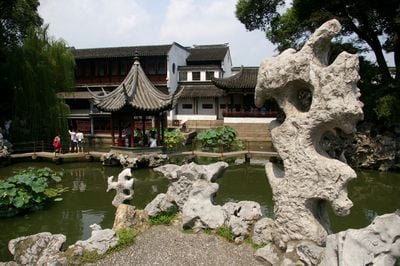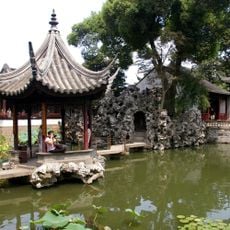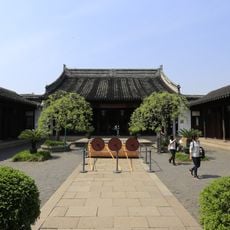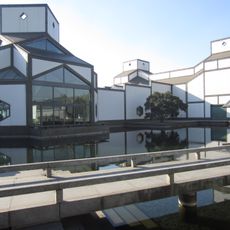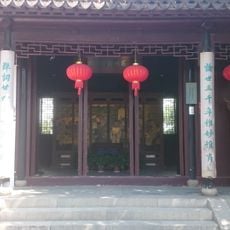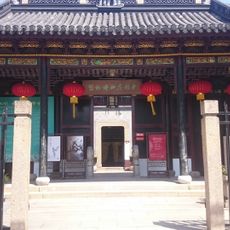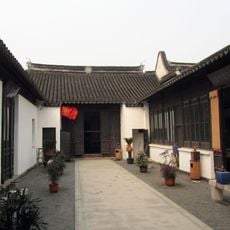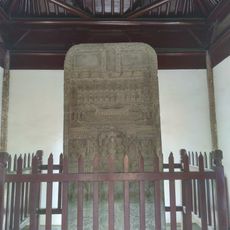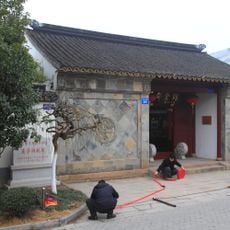
Lion Grove Garden, Classical Chinese garden in Gusu District, Suzhou, China.
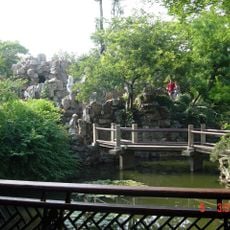
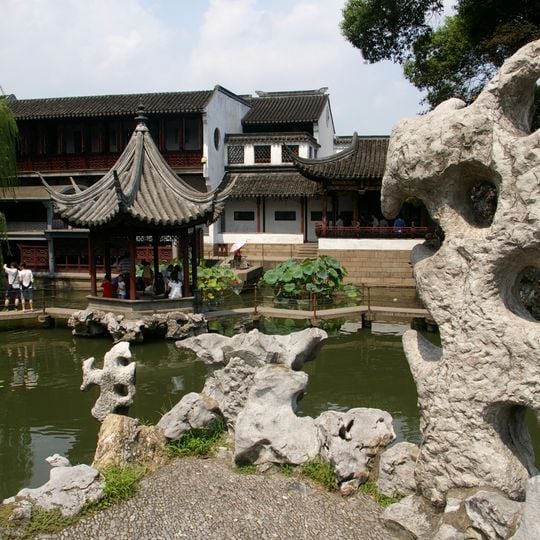
Lion Grove Garden occupies 1.1 hectares at 23 Yuanlin Road, divided between a housing complex and a rockery around a central pond. Its 1,154 m² Taihu rock grotto holds 9 paths winding through 21 caves across 3 levels, with the Lion Peak and four companion stones forming the Famous Five Peaks above.
The monk Wen Tianru founded the garden in 1342 within the Bodhi Orthodox Monastery, naming it for the lion-shaped Taihu rocks and the Lion Peak of Mount Tianmu where his teacher Zhongfeng attained nirvana. After Wen's death it decayed, but in 1589 the monk Mingxing rebuilt it. In 1771 Huang Xi, son of the Hengzhou magistrate, restored it as the Garden of Five Pines. In 1917 Shanghai pigment merchant Bei Runsheng bought it and completed restoration in 1926; the state took it over in 1954 and opened it to the public.
The garden's name comes from the lion-shaped Taihu rocks and also recalls the Lion Peak of Mount Tianmu, where Abbot Zhongfeng attained nirvana. The grotto's paths and caves carry names such as Lion Peak and the Famous Five Peaks, and a folktale tells of the immortals Iron-Crutch Li and Lü Dongbin losing their way in the maze and playing chess in a cave.
The garden is accessible by public bus and is best visited on clear days when light helps reveal the water and rock details. Comfortable walking shoes are useful since the paths wind through multiple levels and cross numerous small bridges.
The rockery's 1,154 m² maze has 9 paths winding through 21 caves across 3 levels. A folktale tells of the immortals Iron-Crutch Li and Lü Dongbin losing their way inside and settling down to play chess in one of the caves.
The community of curious travelers
AroundUs brings together thousands of curated places, local tips, and hidden gems, enriched daily by 94,342 contributors worldwide.