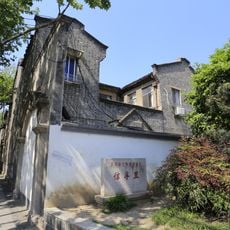
张士诚纪功碑, Stone stele in Suzhou, China.
The Zhang Shicheng Stele, originally called the Longping Statue Stele, is a Yuan-dynasty stone slab 3.07 m high and 1.47 m wide, carved in deep relief. Its four registers show a banquet: attendants with a canopy and auspicious clouds at the top, Zhang Shicheng and his ministers feasting in the main and side halls, an envoy presenting treasures below, and soldiers and horses at the base. It bears 118 carved figures.
The stele was built in 1357 to commemorate military campaigns and efforts to establish stable rule in the region. This period marked a crucial turning point in Chinese political developments.
The stele is also called the Longping Statue Stele, after the name Zhang Shicheng gave Suzhou when he made it his capital. Its carvings are compared to the Han-dynasty portrait stones of the Wuliang Shrine in Shandong, as the pavilion plaque "Wuliang Yigui" states. The scene shows Zhang receiving Yuan envoys with imperial wine and dragon robes, a honour he displayed proudly.
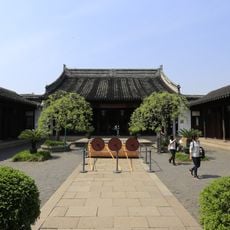
The monument is located at a central historical site in Suzhou and can be explored while walking through the old district. Visitors should allow time to examine the carved inscriptions closely.
The stele is carved in deep relief and shows 118 figures, not an inscription: attendants with a canopy, Zhang Shicheng and his ministers at a banquet, an envoy presenting treasures, and soldiers and horses below the platform. The pavilion plaque reads "Wuliang Yigui", comparing the carving to the Han-era portrait stones of the Wuliang Shrine in Shandong.
The community of curious travelers
AroundUs brings together thousands of curated places, local tips, and hidden gems, enriched daily by 93,371 contributors worldwide.