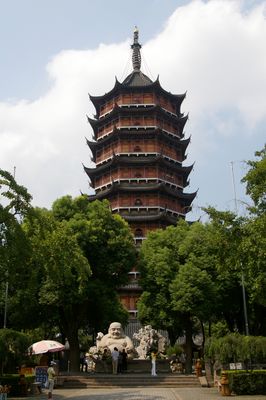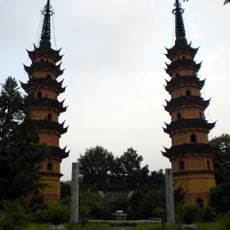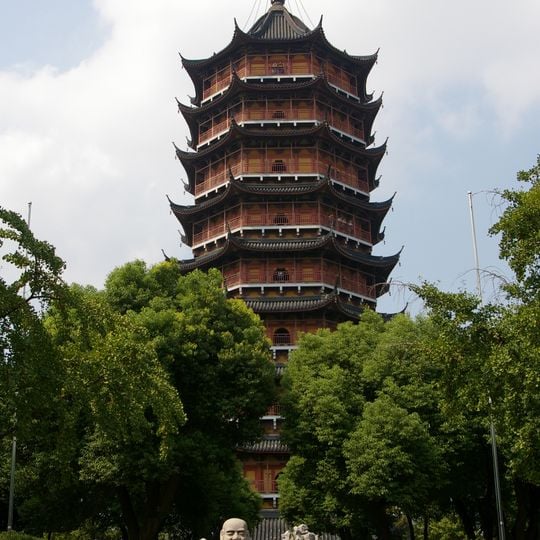
Beisi Pagoda, Buddhist pagoda in northern Suzhou, China.
Beisi Pagoda is an octagonal structure rising about 76 meters (250 feet) with nine stories, each featuring brick walls, stone railings, and wooden balconies that frame the exterior. The interior contains staircases connecting all levels and provides views across the surrounding cityscape from upper floors.
The original structure originated during the Three Kingdoms period under orders from Sun Quan, with the current building completed between 1131 and 1162. This reconstruction represents significant developments in Chinese pagoda-building traditions during the Southern Song era.
The pagoda blends Buddhist traditions with local worship practices and remains a spiritual destination for visitors from the surrounding region. You can observe people praying and meditating within its walls while the architecture itself reflects the religious beliefs of those who built it.
You can climb the interior staircases to reach upper levels and experience views of both the old and new parts of the city. Wear sturdy shoes since the stairs are steep and narrow, which becomes more noticeable as you ascend higher in the structure.
During renovations in 1960 and 1975, workers uncovered hidden objects inside the metal steeple, including a copper turtle, Buddhist statues, and religious relics. These archaeological discoveries reveal that the structure served as a sacred repository for treasures across different centuries.
The community of curious travelers
AroundUs brings together thousands of curated places, local tips, and hidden gems, enriched daily by 91,385 contributors worldwide.