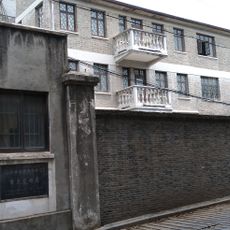
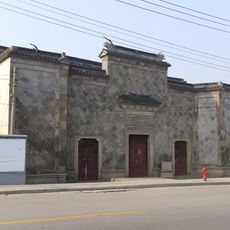
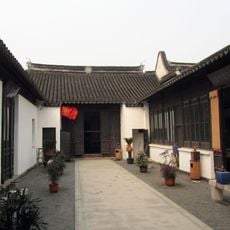
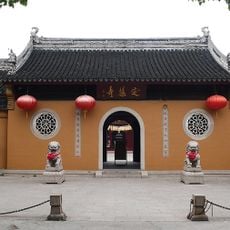
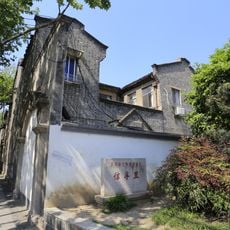
Mountain Villa with Embracing Beauty, Classical garden in Suzhou, China
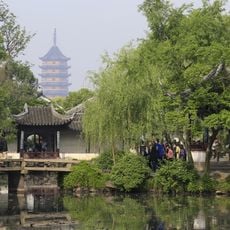
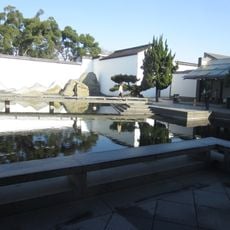
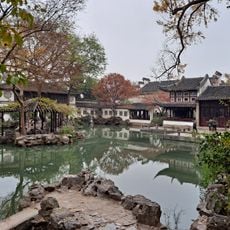
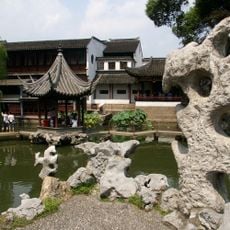
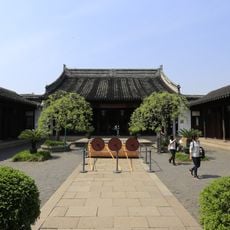
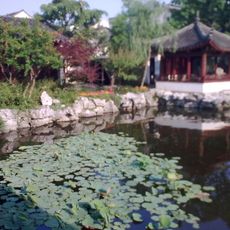
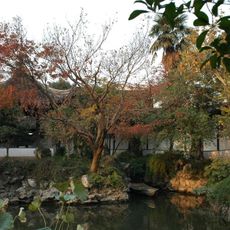
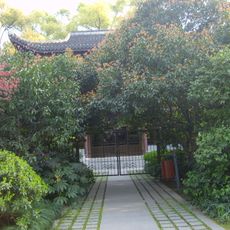
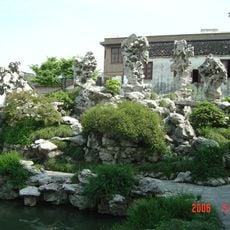
Mountain Villa with Embracing Beauty is a classical Chinese garden in Suzhou, listed as a UNESCO World Heritage Site and protected as a major national cultural site. It is made up of rock formations, a winding stream, stone bridges, covered corridors, and a series of pavilions spread across a compact layout.
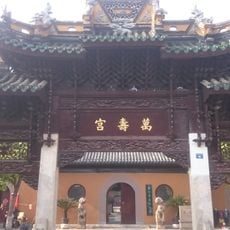
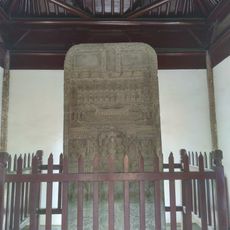
The site goes back to the Jin Dynasty, when two brothers from a prominent family gave their home to build the Jingde Temple on the land. The garden as it looks today took shape in the 19th century, when a craftsman reworked the rockeries and reorganized the overall layout.
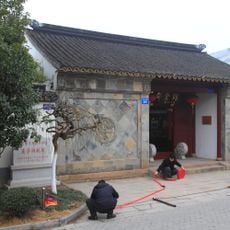
The name Huánxiù Shānzhuāng, "Mountain Villa with Embracing Beauty," was adopted in 1847 when the site became the Wang family's Gengyin charitable estate, also called Yiyuan. The garden is reached through the Suzhou Embroidery Museum on Jingde Road, and its rockery is traditionally credited to the Qing master Ge Yuliang, who built it in 1807 for Sun Jun.
The garden is in the city center of Suzhou and easy to reach on foot or by public transport from most central points. Solid walking shoes are a good idea, as the stone paths are uneven in places and several areas involve steps.
Some parts of the garden only come into view when standing at a specific spot, a deliberate trick used by traditional garden makers to reward slow and attentive walking. This means many visitors walk past entire sections without noticing them on a first visit.
The community of curious travelers
AroundUs brings together thousands of curated places, local tips, and hidden gems, enriched daily by 93,920 contributors worldwide.