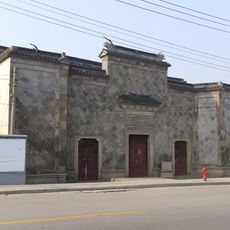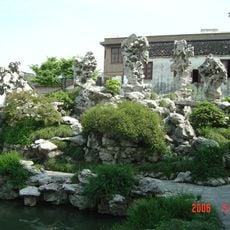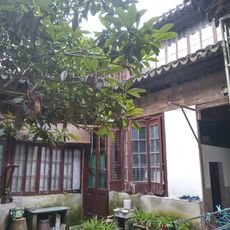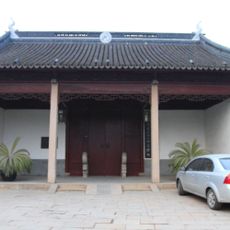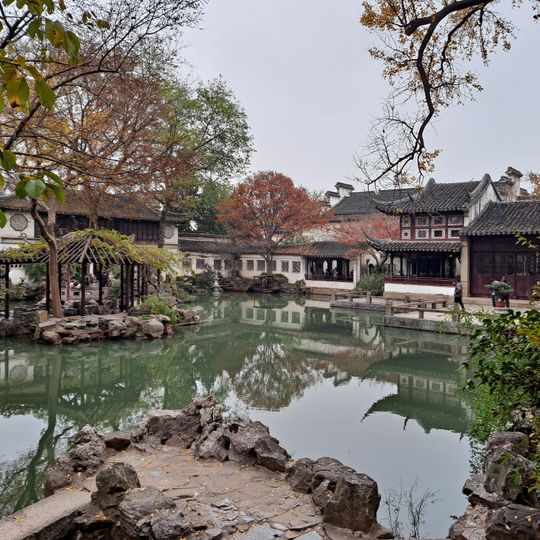
Lingering Garden, Classical Chinese garden in Suzhou, China.
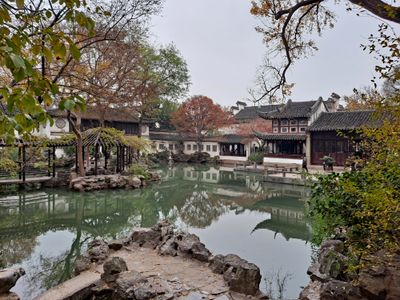
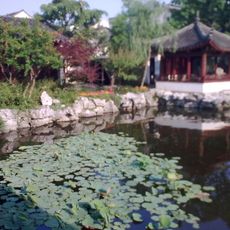
The Lingering Garden is a Chinese garden in Suzhou composed of four distinct sections connected by halls, courtyards, and covered walkways. The layout uses water features, rock formations, and planted areas to create different rooms and views that shift as you move through the space.
Xu Taishi, an impeached and later exonerated official, commissioned the garden in 1593; stonemason Zhou Shicheng designed it as the East Garden. In 1798 Liu Su rebuilt it as Cold Green Village, adding twelve scholar stones and the Celestial Hall of Five Peaks. Sheng Kang repaired Taiping War damage by 1876 and renamed it Lingering Garden, a homophone of Liu's surname.
The garden reflects Chinese design principles where buildings, water, and plants are carefully arranged to create miniature natural landscapes. As you walk through, you notice how each corner was planned to create a particular mood or view.
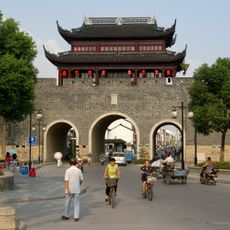
The garden is easy to reach on foot from nearby transport hubs, and following the marked pathways helps you navigate the site. Allow time to leisurely explore all four sections, as the walkways wind through the space and areas are easy to miss.
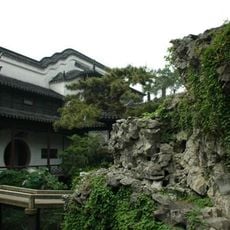
The garden holds a 6.5-metre Taihu limestone called the Cloud-Capped Peak, moved to its present courtyard by Sheng Kang after 1873; it is counted among the largest lake stones of Jiangnan. Beneath the Cloud-Capped Tower nearby lies a fossil fish slab. Sheng Kang named his three granddaughters after the garden's three peaks, and after one died he smashed the substitute Ruiyun stone, leaving only a broken stump.
The community of curious travelers
AroundUs brings together thousands of curated places, local tips, and hidden gems, enriched daily by 93,811 contributors worldwide.