Lime kiln in Loučná pod Klínovcem, Industrial cultural monument in Loučná pod Klínovcem, Czech Republic.
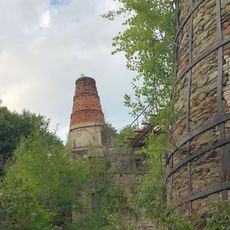
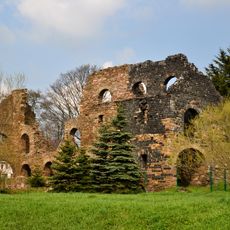
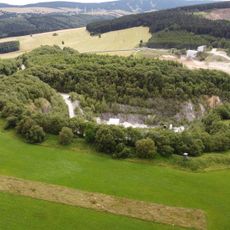
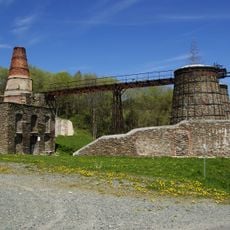
The lime kiln in Loučná pod Klínovcem is a ruined lime-production works from the mid-19th century, with two adjacent polygonal shaft kilns and a quarry. The stone masonry includes two towers, bricked-up vaults and relieving arches; a wooden staircase and a lean-to roof were added to the south tower during the 2017–2019 restoration.
The Buquoy family owned the estate; Countess Gabriela Buquoy acquired the Přísečnice domain, including Kovářská, in 1832. The kiln was built in the mid-19th century beside a quarry of calcite-dolomitic marble, with a second source at Vápenný vrch 1.5 km away. Two shaft kilns fired with wood burned lime until 1924, when unprofitability ended production; builder Röhn from Vejprty briefly resumed mining two years later for three years.
The kiln represents how local communities relied on limestone processing as a foundation for building materials and regional trade during the industrial era. It remains a tangible reminder of the economic ties between this mountain area and surrounding industrial centers.
The kiln stands about 950 metres southwest of Kovářská railway stop on the Chomutov–Vejprty line, served by only two pairs of trains daily on weekends and holidays in summer. From the Kovářská, rozc. Elektropřístroj bus stop, roughly two kilometres away, a green-marked trail leads to the site and on to Háj. Visits are by guided tour, which includes the interior and the firing technology.
The two shaft kilns are the only surviving lime kilns in the Bohemian part of the Ore Mountains. The southern tower collapsed in 2004; repairs between 2017 and 2019 cost 6.6 million korunas and added a wooden staircase and a lean-to roof.
The community of curious travelers
AroundUs brings together thousands of curated places, local tips, and hidden gems, enriched daily by 94,633 contributors worldwide.