Kreisgrabenanlage Dresden-Nickern, Neolithic archaeological site in Dresden, Germany.
Kreisgrabenanlage Dresden-Nickern is a complex of at least three Neolithic circular ditch enclosures near the Gebergrund in Dresden's Nickern district. Excavations from 1993 to 2002 revealed enclosures with diameters of 50 m, 80 m, 140 m and a fourfold ring system (NIE-09) with concentric ditches spanning 70 to 126 m. Inside NIE-09, two slightly asymmetrical palisade rings enclosed about 1,140 m².
The enclosures belong to the Linear Pottery culture (5500–4500 BCE), and the four ditch systems date to around 4600 BCE. Comparable enclosures in Central Europe arose between 4800 and 4600 BCE; structures of similar size were not built again until the Bronze Age, some 3000 years later. Excavations in 1993, 1998 and 2002 uncovered the individual sites ahead of construction of a motorway feeder road.
The ceramic figures and tools discovered here show how early residents lived and worked in their daily lives. You can see along the trail which objects they used and how they built their homes by reading the information panels.
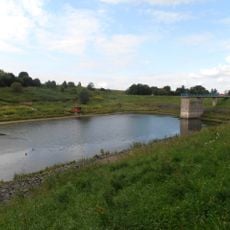
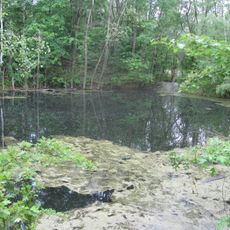
The enclosures lie in the Gebergrund around Nickern, on ground crossed by the Geberbach stream. Since early 2020 an eleven-panel archaeological trail along the Geberbach marks the finds, with a brochure published by the Landesamt für Archäologie Sachsen. Only about 15 percent of the NIE-09 enclosure was excavated, along the motorway feeder road, so the visible traces are slight.
Four circular enclosures located so close together are rarely found anywhere else in Central Europe. This concentration makes the site particularly valuable for understanding early settlement patterns across the region.
The community of curious travelers
AroundUs brings together thousands of curated places, local tips, and hidden gems, enriched daily by 94,435 contributors worldwide.