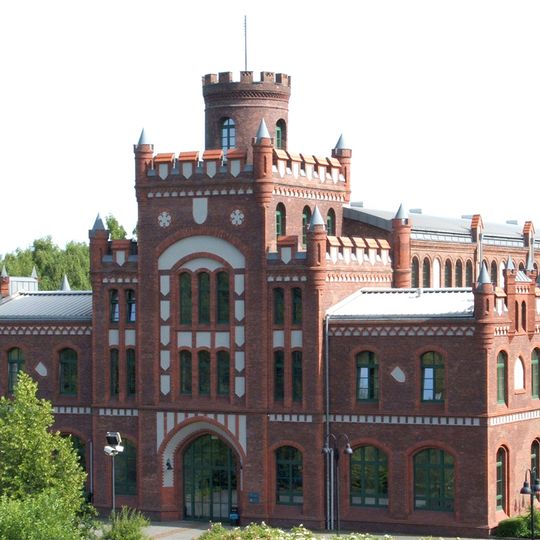
Zeche Adolf von Hansemann, Historical coal mine in Dortmund, Germany.
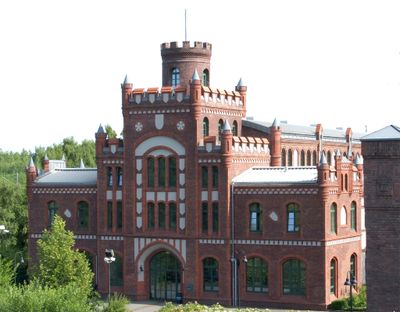
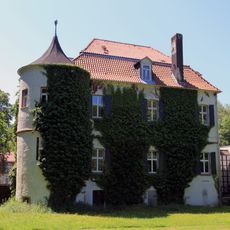
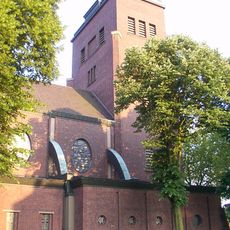
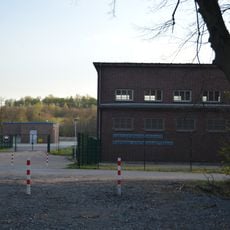
Zeche Adolf von Hansemann is a protected industrial complex in the Mengede district of Dortmund, made up of a round brick tower with crenellations, a warehouse, an engine house, and a gatehouse. All the buildings are in red brick and reflect the construction style common to early industrial sites across the Ruhr region.
The mine was founded in the early 1900s by the Berlin Disconto-Gesellschaft and sat on land between the villages of Mengede and Östrich. It changed hands several times over the decades before closing in the 1970s as coal production wound down across the Ruhr.
The Kleinzeche Max Rehfeld Museum in the gatehouse shows everyday objects from mining life alongside a reconstructed miner's room from the 1920s. Walking through the small exhibition gives a concrete sense of how workers spent their time off the job.
The site now serves as a training center for scaffolding apprentices and is partly open to visitors, with the museum in the gatehouse being the main access point. Allow time to walk the grounds and look at the buildings from different angles, since the outdoor spaces are as informative as the interior.
A large winding wheel stands on the grounds as a memorial to the coal extraction era and is one of the few pieces of original mining equipment still visible in open air at the site. Seeing it up close gives a sense of the scale of the machinery that once drove production here.
The community of curious travelers
AroundUs brings together thousands of curated places, local tips, and hidden gems, enriched daily by 92,049 contributors worldwide.